Showing posts with label Reginald Fessenden. Show all posts

Monday, January 29, 2018

1906


From the big scrapbook of time, here’s a look at Canada in 1906-


January 1: The nation’s first movie theatre opens. With seats for 500 patrons, the  Ouimetoscope is located in Montréal at the corner of Ste-Catherine and Montcalm.


January 24: The 1,598-tonne iron-hulled passenger steamer SS Valencia strikes a reef in sight of land near Pachenea Point and sinks off the southwest coast of Vancouver Island, taking 136 lives with her. In 1933 the passenger ship’s lifeboat number five will be discovered in good condition—floating in Barkley Sound.


January 27: Farmers in Saskatchewan found the Grain Growers' Grain Company in the town of Sintalulta. The cooperative will do its best to promote fair trade. Stocks are listed at $25 and there are plans to buy a seat on the Winnipeg Stock Exchange.

The Basilica, Mary Queen of the World, was built in 1852. It is one-third size replica of St. Peter's in Rome.

February 18: The Archbishop of Montréal demands that Roman Catholics refrain from attending horse racing events, baseball games, concerts and secular performances on the Sabbath.
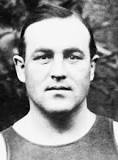

February 23:  Boxer Tommy Burns wins the World Heavyweight Championship in Los Angeles. Born near Hanover, Ontario, the boxer accidentally started his career by punching out a second mate while working on a ship.


February 25: The first ever automobile show opens its doors in Toronto at the Armouries.

The 1906 Ford Model N. There are 41 automobiles registered in Alberta.
March – H.W. White follows the 333-kilometre trail from Edmonton to Calgary in his new Ford. The trip takes only two days.


March 8: Parliament convenes. During this second session of the 10th Parliament, MPs will pass The Lord’s Day Observance Act banning work and many secular activities on Sunday. 


March 9: Coalminers in Lethbridge, Alberta walk off the job. They want better working conditions. The colliers will stay off the job until December 2nd.

The Desjardins Credit Union will have more than 7 million members in 2017.
March 9: The Québec National Assembly recognizes credit unions as legitimate banking institutions. 


March 16: The Alberta legislature sits for the first time. Business will be conducted in The Thistle curling rink until the new building is complete.


March 17: The Montréal Wanderers whip the Ottawa Silver Seven to win this year's Stanley Cup.


April 2: The first ever session of the Saskatchewan legislature opens in Regina.


April 9: Folks who live in the “Gateway to the West” are glad to learn the strike against the Winnipeg Electric Railway Company is over. The engineers and motormen have accepted a 10-hour workday and a pay increase.

Torchy Peden in 1929.

April 16: William Peden is born in Victoria, British Columbia. Because of his flame-red hair he’ll be known as ‘Torchy’ and become the world’s most famous bicycle racer. At a time when hockey players earn $10,000, Torchy's annual earnings will exceed $50,000.

April 21: Montréalers catch the horseless carriage bug. Many shell out 25 cents to attend the first automobile salon and the exhibition is a resounding success.

1906 Rolls-Royce Silver Ghost

April 23: The Alberta Legislature sets the provincial speed limit at 16 kilometres per hour within city limits and 32 kilometres per hour in the country.


April 30: The Ottawa Public Library opens. Millionaire Andrew Carnegie donates $100,000 to the city for building the facility because citizens have pledged to raise $7,500 a year for its operational costs. 


March 31: King Edward VII grants a coat of arms to the province of British Columbia.


May 1: It’s gold for Canada as William Sherring of Hamilton, Ontario wins the Marathon at the Olympic Games in Athens.


May 8: American stagecoach robber Ezra “Bill” Miner holds up a CPR train near Kamloops, BC. He nets only $15 for the caper. The legendary crook, who originated the phrase, “Hands up!” will be captured a few days later, then escape from the prison in New Westminster, BC. The Gentleman Robber’s story is told in the movie,  The Grey Fox.


May 8: The University of Alberta receives its charter. Students will receive their first degrees from the institution in 1912. At the start of the 21st Century, the UofA will be the fifth largest university in the country.


May 9: Taxpayers may grumble but federal Members of Parliament vote to keep their salaries at the new rate of $483 a month. The primary argument is that a high wage is required to attract good candidates to public office.


May 14: Ontarians are about to be shocked into the 20th Century as the Hydro-Electric Commission of Ontario is established as a Crown corporation. The first goal is to generate power from Niagara Falls.


May 19: Gabriel Dumont dies peacefully at the age of 68 on his farm, near Batoche, Saskatchewan. The military strategist and Métis leader was Louis Riel’s right-hand man during the Northwest Rebellion.


City Hall will be completed next year.

May 23: It’s official—Regina is named the capital of Saskatchewan. Work is underway already to build a city hall and a provincial legislature. The Queen City will be a hub of commerce, growing to 192,000 in population in 2015. 

Downtown Saskatoon. The city is home 4,500 people.

May 26: With a population of 4,500 people, the villages of Nutana, Riversdale and Saskatoon are incorporated as the City of Saskatoon. The “Paris of the Praries” will grow to be home to more than 200,000 Saskatonians in the 21st Century.


May 26: Residents of Saskatchewan must pay $10 to the Provincial Secretary to license their automobiles. They must also make their own license plates until 1912.


July 5: Lift a pint before midnight as the alcohol taps will be turned off everywhere on Prince Edward Island, where citizens in all three counties have voted to “be dry.” PEI is the first province to embrace the temperance message and ban booze.


July 8: Lord’s Day Act or not, the City of Winnipeg has decided to operate its streetcars on Sundays, despite protests from the churches. 


July 11: It has taken nearly 20 years of lobbying but the Lord’s Day Act is now a national law. Canadians are required to refrain from labour and frivolous amusements from midnight Saturday night until midnight Sunday night.  It is illegal to shop, hunt, have a beer or even go to a movie.  The law will be ruled unconstitutional by the Supreme Court of Canada in 1985.

The posh 1906 Ford Model K had a six-cylinder engine.

August 2: The first Ford cars are boxed at the plant in Windsor, Ontario and shipped to Australia. 


August 24: Organizers of “harvest excursion trains” that traditionally carry unemployed Cape Breton labourers to work in Prairie wheat fields are having little success in filling their quotas this year. The collieries are in a boom period and hiring every able-bodied man willing to go down in the mines.


August 26:  By Royal Warrant, King Edward VII grants the Coat of Arms of Saskatchewan.

The Gjoa registers 45-tonnes.

August 30: Explorer Roald Amundsun of Norway along with his crew of six arrive in Point Barrow, Alaska. It has taken them three years to make the journey but Captain Amundsun is the first to pilot a ship through the Northwest Passage.


October 30: There won’t be much trick-or-treat fun in Kent County, New Brunswick with more than 100 cases of small pox spread throughout the area. All of those affected are under quarantine. 

Canadian communications pioneer Reginald Fessenden poses for the camera at his first broadcasting studio.

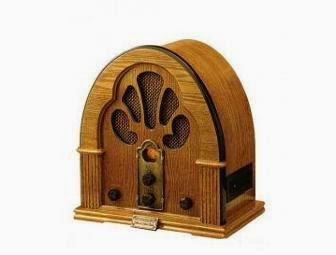
Christmas Eve: Reginald Fessenden makes the first radio broadcast in world history. by playing music and speaking. It will take another 13 years before the world’s first radio station opens in Montréal. 

1906 Locomobile Model H.
December 31: St. John’s City Council has been made responsible for motor vehicle registrations in the Dominion of Newfoundland. Annual fees are $12 for a car with less than ten horsepower, $12 for a car with ten to 20 horsepower, $18 plus 50c for a car with more than 60 horsepower and $38 plus 75c for each horsepower rating more than 60. 

1906 Ford Model N.

December 31:  Workers at the Ford Motor Company of Canada, Limited in Windsor, Ontario have built 101 vehicles—76 for export throughout the Empire and 25 sold domestically.


Saturday, March 22, 2014

1932


From the big scrapbook of time, here’s a look at Canada in 1932--
Hupmobile ranges in price from $795 to $2,755.  Based in Windsor, Ontario, a total of 263 Hupmobiles will be sold in eastern Canada in 1932.


The HMCS Skeena is a river-class destroyer, launched last year.
January 23: Royal Canadian Naval vessels HMCS Skeena and HMCS Champlain arrive in Acajutla, El Salvador to evacuate British subjects and other foreigners attempting to escape the civil war that has broken out in this small Central American country.

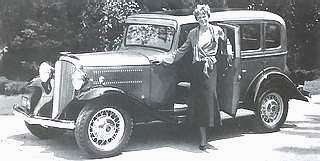
This is the 1932 Essex Terraplane Series E Sport Sedan with famed aviatrix, Amelia Earhart.
February – Assembly of Hudson and Essex cars begin at the Tilbury, Ontario plant.

February 4: The Winter Olympics open to great fanfare in Lake Placid, New York. Canada will come home with  gold for hockey.

February 17: Mounties end of the longest manhunts in law enforcement history as they cut down the Mad Trapper in a hail of bullets. Albert Johnson of Rat River in the Yukon is wanted for shooting police officers. He committed a crime spree that stretched more than 200 kilometres over a span of eight weeks.

March 5:  In St. John’s, Newfoundland the House of Assembly is attacked by a crowd estimated by police to be as large as 10,000 angry protesters. Newfoundlanders demand that an end be put to public corruption. A furious mob smashes into the parliament building and trashes it. Prime Minister Squires escapes in a taxi.

March 10: According to a report issued by the House of Commons Committee on Broadcasting, there are 75 private radio stations broadcasting to listeners throughout the Dominion.

March 30: The first V-8 Ford is built at the factory in Windsor, Ontario. Company president Wallace Campbell and W.F. Herman, publisher of the Border Cities Star, take the shiny new sedan for a spin.

March 31: The public meets the 1932 Fords for the first time. The Windsor, Ontario automaker will sell 11,447 of the V-8 beauties throughout all nine provinces by the end of the year. Another 16 Ford passenger cars will be shipped to the Dominion of Newfoundland.

April 1: Serving since 1917, the Alberta Provincial Police are absorbed into the Royal Canadian Mounted Police as a Division of the Mounties--as are the provincial police forces in Manitoba, New Brunswick and Nova Scotia.

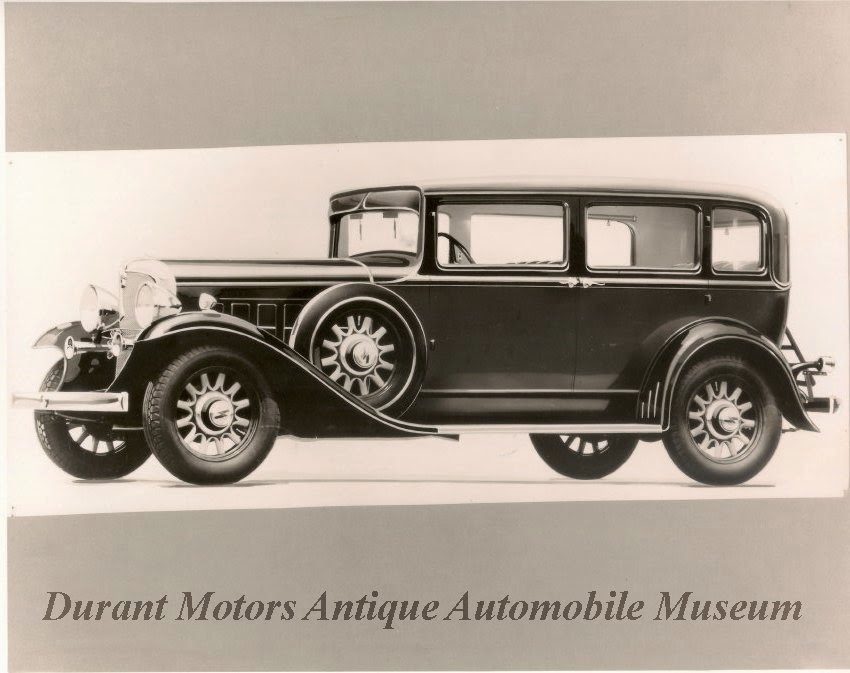
1932 Durant 622 four-door sedan.
April 1: Dominion Motors Limited pays its last dividend. Maker of the Frontenac and Durant automobiles, the Leaside, Ontario company will lose $668,961 by year’s end.


April 9:  It is a Leafs' nation! The Toronto Maple Leafs shut out the New York Rangers in three games to take home the Stanley Cup.

April 30: Economic times are tough enough that the legislature in Fredericton transfers control of the New Brunswick Provincial Police force to the Royal Canadian Mounted Police.


May 1: As a cost-cutting measure, the RCMP will be the police force on Prince Edward Island, replacing the PEI Provincial Police.

May 5: The Sons of Freedom, an extreme faction of the Dukhobor sect, are in trouble with the law. A judge in Nelson, British Columbia sentences 118 of them—including 34 women—for marching and praying nude in public. Mounties have found stolen dynamite in sect members’ possession, too.

The Parliament of Canada sits in Ottawa.
May 16:  Civil servants in Ottawa take a 10 percent cut in pay. Though largely symbolic in nature, the gesture acknowledges that times are tough right across the nation.

This 1932 CRBC drama is broadcast from studios in Montreal.
May 24:  The federal government announces that the newly established Canadian Radio Broadcasting Commission will build a series of powerful stations across the country because “the airwaves belong to the people,” according to Prime Minister Bennett. The CRBC is a new name but the network is made up of stations purchased from Canadian National Railways.

May 25: William Patrick Kinsella is born in Edmonton. He will grow up to be a university professor and an author. Among his novels will be Shoeless Joe. It will be made into the 1989 movie, Field of Dreams.


June 17: The oil tanker Cymboline, in port for repairs at the Vickers' Drydock in Montreal, explodes. The death toll is 21 and 64 more are injured. Many of the dead are firefighters. Flags are lowered to half mast in Montreal, in memory of the brave men who battled the fire.  Damage is $1,000,000.

June 24:  Mel Hurtig is born. He will grow up to be a fierce promoter of all things Canadian and publish the landmark Canadian Encyclopedia in 1985.

July 18: The United States and Canada sign a declaration to develop the St. Lawrence River into a seaway that can handle ocean-going vessels as far inland as Lake Superior. The mega-project will be complete in 1959.

Lands coloured red show the Dominions and colonies of the British Empire. One out of every four people on earth live in the Empire.
July 20: The Ottawa Agreements are signed. This treaty creates a single trade zone within the British Empire. Canada will do very well with this preferential trade pact.

July 22:  Reginald Fessenden, the Father of Radio, is dead at his winter home in Bermuda at the age of 65. Born in East Bolton, Quebec, as a child, Fessenden actually watched Alexander Graham Bell conduct experiments with the telephone.

Towards the Dawn is a powerful slogan for the newly minted CCF Party.
August 1: There is a new political party on the landscape as socialists, farmers and labour join forces to create the Cooperative Commonwealth Federation at a convention in Calgary. Its aim is to alleviate suffering caused by the Great Depression through public cooperation and economic reformation. The name of the party will be changed to the New Democratic Party in 1961.

The largest of the Great Lake freighters, the SS Lemoyne is 192 metres (633 feet) in length and has a beam of 21.3 metres (70 feet). It is loaded with  14424 Metric tonnes (530,000 bushels 0of wheat.
August 6: The Governor General opens the fourth Welland Canal. The Right Honourable Earl of Bessborough declares the canal to be "open to the commerce of the world."

August 14: The Ninth Summer Olympics close in Los Angeles. Canada earned two gold medals including one when Duncan McNaughton of British Columbia won high-jumping gold when he cleared the bar at 2.01168 metres (6 feet and 6 inches).

September 12: VOGY begins broadcasting from studios in the Crosbie Hotel in St. John’s. Two years from now the station will merge with VONF. In 1939 VONF will become Newfoundland’s first public broadcaster and in 1949 the station’s call letters will be changed to CBN—when it becomes part of the CBC.

September 25: Glenn Gould is born in Toronto. He will grow up to become one of the world’s most famous pianists and an unparalleled master of Beethoven interpretation. A stroke will be the cause of his death in 1982.

Issued in 1923 and bearing the likeness of the Duke of Wales, the $2 bill will not change until 1935.
October 8: With more than 25 percent of people without jobs, 70,000 men homeless and wandering the countryside, the Department of National Defense is ordered to set up civilian work camps. Once opened, the government will hire men at $2 a day to work on public programmes.

The prison was built by prisoners and opened in 1873.
November 7: Inmates at the St. Vincent de Paul Penitentiary in Quebec riot and trash the facility in bid to escape the notorious detention centre. It is the nation’s worst prison riot ever with damage estimated at more than half a million dollars. The prison will close in 1989.

November 11: The Broadway Bridge opens in Saskatoon. The gracefu,l open spandrel deck art bridge was an early 'make work' project for the thousands of unemployed men in Saskatchewan. Work was only offered to married men with children. They were paid 45c an hour for their labour. Hours were determined by how large their families were.

November 14: Townies have another new radio station to enjoy as VONF takes to the airwaves in St. John's, Newfoundland.

November 30: Dozens of explosions rip through Montreal, destroying streets and buildings. Amazingly, no one is killed. The worst of the damage is along the very busy St. Denis Street. Authorities determine that a fire started in an underground gas line, causing the horrific disaster.

December 3: The Hamilton Tigers trounce the Regina Roughriders to take home the Grey Cup. The final score is 25 to 6 in front of a home crowd town of 4,086 spectators. Hamilton fans are ecstatic.  This is the fifth year in a row that the Roughriders have made it to the finals and the fifth time the team has lost.
 
December 31: Oldsmobile production will add up to a total of  907 cars in 1932. The Sport Coupe weighs in at 1446.96 kilos (3,190 pounds) and sells for $1,140 f.o.b. Oshawa.