Showing posts with label Rocket Richard. Show all posts

Tuesday, January 14, 2014

1955


From the big scrapbook of time, here’s a look at Canada in 1955--

The Clipper Custom Constellation, by Packard, hardtop sells for $4,220. Only 577 units of the luxury marque are registered during the 1955 model year.


January 1: Domestic network television is only three years old but the CBC reports that two out of three homes across the country can receive the public broadcaster’s signal.

January 1: The Pinetree Line—a series of radar defense stations built across Canada to defend North America from Soviet nuclear attack—is handed over to the Royal Canadian Air Force. Previously the command had been a joint US-Canada effort.


January 4: In Hamilton, Ontario, Studebaker workers gear up for the 1955 model year. This year’s Studebakers feature Ultra-view wraparound windshields. Production will hold steady at sixty units a day until adjusted to forty per day in April.

January 27: As of today, it is illegal for natives in the Northwest Territories to possess liquor of any kind.

February 23: Cape Breton fiddler and composer Jerry Holland is born in Boston of Canadian parents. The kid will be good enough to appear on Don Messer’s Jubilee when he is ten. The Down East legend will release ten albums and be best known for Brenda Stubberts Reel and My Cape Breton Home.


March 11: Leslie Cliff is born in Vancouver. She will grow up to become a swimmer, winning three gold and two silver medals at the 1970 Commonwealth Games. She will win silver at the 1972 Olympics and two more gold medals at the 1974 Commonwealth games. 

March 17: Hockey legend Maurice “Rocket” Richard is suspended from a game at the Forum. Some 10,000 angry fans riot for seven hours, destroying a five-kilometre stretch of St. Catherine Street in Montreal. Richard goes on the radio to beg the fans to go home. Police arrest 100 and the incident is promptly dubbed ‘The Richard Riot.’

1955 Ford Fairlane Town Sedan
March 17: The 105-day strike against Ford is over as workers return to their jobs in Windsor, Etobicoke and Oakville.

March 22: A spectacular fire rips through the Malton, Ontario airport causing $5 million worth of damage.

March 27: The CBC airs a special report on Elmer the Safety Elephant who has been teaching kids to ‘safen up’ since 1947.  Millions of school-aged children know the five rules for safety from coast to coast to coast. Elmer’s flag flies under the Union Jack at schools that have been accident free for 30 days or more.

April 2: Consumers finally get to see the new Chevrolet and GMC Second Series of light duty trucks that were announced on March 20.

April 2: Folks in Halifax and Dartmouth can get acquainted more quickly as the Angus L. MacDonald Bridge is inaugurated. The toll is 40 cents for the car and driver. Passengers or pedestrians can buy 25 tickets for $1. Spanning Halifax Harbour, it is the second longest suspension bridge in the country. Only the Lion’s Gate Bridge in Vancouver is longer.

April 6: Her parents name her Catherine Frederica Theresa Jones when she is born in St. John’s, Newfoundland. The funny kid will grow up to be a comedian and TV star. Cathy Jones will earn ten Gemini Awards for her offbeat sense of humour on CODCO and This Hour has 22 Minutes.

April 7: Ford announces that it will spend $8.6 million for a new head office building in Toronto. The company has been building cars in this country since 1904.

April 12: Ottawa announces that it will make the Salk vaccine available to Canadians. This miracle drug prevents polio, a debilitating disease that attacks children, leaving them handicapped.

April 14: Going right down to the wire, the Detroit Red Wings stomp the Montreal Canadians in the seventh game to claim the Stanley Cup. The team will not win another Stanley Cup until 1997.

April 24: Canadian National inaugurates its new passenger train service. The Super Continental will run between Montreal and Vancouver. The CPR introduces its new trans-continental service the same day—its stainless steel streamliner features dome cars and is christened The Canadian.

May 5: Tabled in the House of Commons today is an bill to create a Distant Early Warning System of radar stations in the Arctic. The DEW Line will give advance knowledge of attacks by the Soviet Union but it will also mean 1,000 US troops will be stationed in Canada.

May 10: World Heavyweight Boxing Champion Tommy Burns is dead at the age of 73 in Vancouver. Born in Chesley, Ontario, the 170-centimetre tall fighter won the championship in 1906 and lost it in 1908. He dies unknown, un-remembered, in absolute poverty. Only four people attend his funeral.

May 17:  The 1,260-metre long Canso Causeway opens to train traffic. The engineering wonder connects Cape Breton Island to the mainland of Nova Scotia.

Passengers will log 288 million kilometres with Canadian Pacific this year.
June 3: Canadian Pacific Airlines begins direct flights from Vancouver to Amsterdam. Passengers will fly over the North Pole en route to the European destination.

June 25: We are a nation on the move. Ontario has paved 513 kilometres of the Trans-Canada Highway. It has another 1,758 kilometres to complete and pave before it is complete.

June 30:  Truck assembly at the Hamilton plant has been suspended after 256 units were built. Studebaker will import trucks from the United States.

Mt. Temple is 3,544 metres tall.
July 11: An avalanche on Mount Temple in Alberta kills eleven teenaged hikers. It will be the worst climbing accident in history.

July 17:  Jubilant officials at Chrysler Canada announce that workers have completed its 100,000th 1956 model car. It is the first time the company has built so many automobiles in a single model year.


July 31: There are 11,704 employees on the Chrysler Canada payroll and the company boasts 1,150 dealers throughout the Dominion.

August 5: Isaak Walton Killam is dead at the age of seventy. The richest man in the country, Killam started out as a paperboy in his home town of Yarmouth, Nova Scotia. Influential in establishing the Isaak Killam Children’s Hospital in Halifax and the Montreal Neurological Institute, his inheritance tax will be used by Ottawa-at his request-to found the Canada Council of the Arts.

August 17: Molson, the nation’s oldest suds maker, opens a brewery in Toronto. The 300,000-barrel capacity operation will produce Crown Anchor Lager for the thirsty folks in Upper Canada.

August 18: The Eighth World Scout Jamboree is held at Niagara-on-the-Lake. Some 11,000 Scouts from seventy-one countries descend on the bucolic town. It is the first International Jamboree to be held outside of Europe.

The Dodge Mayfair is built in Windsor, Ontario by workers at Chrysler Canada.
September 3: The Canadian Football League kicks off the season in grand style as folks from St. John’s to Victoria tune in to the CBC on their television sets for the fifth season.  Chrysler Canada is the sponsor.

September 6: Folks in St. John’s warm up their Electrohomes to watch CJON take to the airwaves. The CBC affiliate will jump ship to CTV in 1964 and move to Global in 2003. Famous for its five-hour primetime schedule and the quirky habit of running music videos instead of commercials, Canada’s Superstation will be carried by many cable companies across the nation in the 21st Century.

September 8:  The CGE Show is not only heard on the Dominion Network of the CBC, now it can now be seen on CBC television. Folks can watch the Leslie Bell Singers and the Howard Cable Orchestra perform right in their living rooms. The popular variety programme will be renamed Showtime and run until 1959.

September 12: Workers at Ford’s engine plant complete the 2,000,000th V-8 engine to roll off the Windsor assembly line. The factory will build one out of every four V-8 engines in the world.

September 28: Stephane Dion is born in Quebec City. After a teaching stint at the Universite de Moncton he will stand for Parliament, become a cabinet minister and Leader of Her Majesty’s Loyal Opposition.

1955 Oldsmobile Super 88 two-door sedan is General Motors' mid-price offering.
September 23: GM workers walk off the job. The strike will be long and bitter, lasting 144 days.

October 11: Millions of hockey fans see Hewett Foster say “Hello Canada!” as Hockey Night in Canada is aired on CBC Television for the first time. The voice of hockey will die of throat cancer in 1985.

October 12: Jane Siberry is born in Toronto. When she grows up she will become a smouldering singer known for such songs as Mimi on the Beach, When I was a Boy and the immortal duet with K.D. Lang, Calling All Angels.

October 12: The Trades and Labour of Canada and the Canadian Congress of Labour vote to merge. The new union will be called the Canadian Labour Congress. It will be independent of Tommy Douglas and the CCF party.

October 23: The Grits mark twenty years of unbroken rule in the House of Commons. No other political party has held Ottawa—and the country--in its grasp for so long.

1955 Hayes Clipper
October 31: Hays, the Vancouver-based truck manufacturer, announces that it has had sales of $2,297,239.88 in the past twelve months. That is a 14 percent increase over the previous year. It builds heavy-duty and extra-heavy duty trucks for highway hauling, the oil industry, logging, mining and construction operations.

November 26: Nash Motors of Canada, Limited has provided the cars for the Grey Cup parade. The Grey Cup goes home with the Edmonton Eskimos, having whipped the Montreal Alouettes 24 to 19. Held at the Empire Stadium in Vancouver, this marks the first time that the classic football event has ever taken place outside of Ontario.

1955 Pontiac Laurentian four-door sedan
December 31: The Top Ten makes, in order of domestic production, are Chevrolet, Ford, Pontiac, Dodge, Plymouth, Buick, Meteor, Oldsmobile, Mercury and Studebaker.


  The imported Willys Bermuda hardtop retailed for $2,556 before taxes in 1955. Only a handful was sold before the company withdrew its passenger car lines from the domestic market in June.


Thursday, December 26, 2013

1960


From the big scrapbook of time, here’s a look at Canada in 1960--


 January 1: The national nose count, according to the Dominion Bureau of Statistics, adds up to 18,238,000 of us.  Of that number 4.2 million are kids in elementary or high school, 178,991 students are enrolled in vocational schools and 1,002,000 attend universities.

January 2: Paul Sauve, Premier of Quebec, dies in office. The World War Two veteran has served as Premier for only 112 days.

January 12: Oliver Platt is born in Windsor, Ontario. He will grow up to be an actor starring in such films as The Three Musketeers and Bicentennial Man.

January 16: Gordie Howe surpasses Maurice “Rocket” Richard as the leading scorer in NHL history.

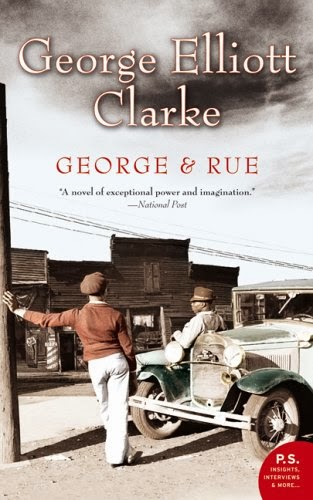
February 12: George Elliot Clarke is born in Windsor Plains, Nova Scotia. He will grow up to become an author, poet and playwright who celebrates his African-Canadian heritage. His gripping novel, George and Rue, tells the story of two New Brunswick brothers who murdered a taxi cab driver in 1949.

February 19:  Figure skaters Robert Paul and Barbara Wagner perform flawlessly at  the Olympic Games in Squaw Valley and skate to Olympic gold at the winter games. A minute into their programme they approached the judges and asked to start over because a skip in the record threw them off balance. . All seven judges give the couple first place scores, marking the first time in Olympic history that the gold medal has been awarded to a non-European pair.


February 22: Paul-Emile Borduas has died in Paris of a heart attack at the age of 54. Born in St-Hilaire, Quebec, he was an artist of world renown, known as a member of the Automatiste school of painting.

February 28: Dorothy Hoogstraten is born in Vancouver. She will grow up, change her last name to Stratten and be Playboy magazine’s Playmate of the year for 1980. She will star in two movies before being murdered by her husband at the age of 20. Her life will be made into the movies, Star 80 and Death of a Centrefold. Bryan Adams will pay tribute to her with his songs, Cover Girl and The Best Was Yet to Come.

Voting in a federal election on a reservation in 1960.
March 10: Indians are given the right to vote in federal elections. Most Aboriginals are fearful this is just one more trick to get native Canadians to give up their independent status, granted by Queen Victoria.

March 28: Laurentian University in Sudbury, Ontario receives its charter. The institution of higher learning will be officially bilingual.

March 29: Pop singer Paul Anka’s Puppy Love hits number one on the Billboard music chart. The smooth, crooning heartthrob hails from Ottawa.

April 4: The CBC launches a new bilingual FM service for listeners in Toronto, Montreal and Ottawa. It airs weeknights from 7 pm until midnight and from noon to midnight on weekends.


April 14: The Montreal Canadiens beat the Toronto Maple Leafs four games to zip. The Habs skate home with Lord Stanley’s Cup for the fifth year in a row.


April 24: Folks in Winnipeg have something new they to do; they can warm up their television sets and watch CBWFT, the newest station to sign on as part of the Radio-Canada network.

April 28: John Cerutti is born in Albany, New York. He will grow up to pitch for the Toronto Blue Jays. When he retires he will be a sports broadcaster on the CBC and later Rogers Sportsnet.

April 29: Robert J. Sawyer is born in Ottawa. He will grow up to be a Top Ten science fiction writer. His books will include Hominids and Mindscan.

By 1980 we will consume 18 million kilos of Kraft peanut butter a year.
April 30: Kraft peanut butter appears on supermarket shelves for the first time. The bears on the label are Crunchie and Smoothie. Two years from now Kraft peanut butter will be the number one selling peanut butter in Canada and hold that spot for the next 50 years.

Prime Minister Meighen was our ninth Prime Minister.
June 5: Former Prime Minister Arthur Meighen dies at home at the age of 86. Though PM twice in the 1920s he never held a seat in Parliament. He was appointed to the Senate but came back to lead the Tories in 1941. When he lost yet another time, the Right Honourable member retired from politics for good. He will be buried in St. Mary’s Cemetery. Mt. Meighen will be named for him in the Rocky Mountains of British Columbia as well an island in the Northwest Territories.

July 9: Seven-year old Roger Woodward is swept over Niagara Falls when the 4-metre aluminum boat he is riding in capsizes. Wearing only a swimsuit and a life preserver, he will miraculously live to tell the tale because he is rescued by the captain of The Maid of the Mist.

July 12: New Brunswickers turf out John Flemming’s Conservatives this election day. The Liberals will form the government in Fredericton for the next decade. Louis Robichaud, the new Acadian premier, is on record as being in favour of making the Picture Province officially bilingual.

July 19: Atom Egoyan is born in Egypt. His family will move to Canada when he is three. He will grow up to become a film maker, best known for Exotica and Where the Truth Lies.

July 25:  It is an age of experimentation. The ten premiers and the Prime Minister will meet for the first time in what will become a regular yearly consultation called The First Ministers Conference.


August 10: Prime Minister John Diefenbaker’s Bill of Rights is given royal assent and becomes law. The eloquently simple document spells out the rights of citizens.

August 25: The six-lane wide Second Narrows Bridge is dedicated in Vancouver. Three years in the building, 18 men lost their lives when the centre span collapsed on June 17, 1958.

The Great Slave Highway will become part of the Yellowknife Highway. The 188-kilometre road will be paved in 2006.
September -- The Great Slave Highway opens, connecting Yellowknife with southern Canada. This important artery is part of the federal government’s $150 million Roads to Resources program.

September – Bilingual York University in Toronto is open for classes for the first time as does the bilingual Laurentian University in Sudbury, Ontario.

Glen Ivey is host of The Nature of Things. David Suzuki will begin to host the show in 1979.
September – Folks with television sets can warm them up and watch a new show on the CBC called The Nature of Things. Other popular programs broadcast on the people’s network are Don Messer’s Jubilee, Juliette and Front Page Challenge.

September 10: The Halifax International Airport opens. Equipped to handle 180,000 passengers a year, the terminal will expand to accommodate 2.9 million visitors by the end of the century. In 2005 the name will be changed to the R.L. Stanfield International Airport, in honour of former Premier and Leader of the Queen’s Loyal Opposition, Robert Lorne Stanfield.

September 21: David William Smith is born in Milton, Ontario. He will grow up, change his name to David James Elliot and become an actor, starring in TV shows like Street Legal, the Untouchables, Melrose Place, JAG and Close to Home.

September 23: Smokers die sooner than non-smokers says a survey released by the federal Ministry of Health. The startling stats were compiled after studying World War One veterans.

October 6: Maurice “Rocket” Richard’s jersey, the immortal Number 9, is retired by the Montreal Canadiens.

Introduced in World War One, Canada War Bonds will become Canada Savings Bonds in 1946.
October 11: It’s time to buy Canada Savings Bonds. Interest this year is 4.71 percent and the maximum limit has been raised to $10,000 per person.

October 24: Jean Drapeau bests Sarto Fournier at the polls to become Mayor of Montreal. Drapeau had been mayor from 1954 to 1957. His Worship promises clean government and a subway system. The 37-year old visionary will preside over City Hall for 29 years, outlasting nine premiers in Quebec City and seven Prime Ministers in Ottawa.

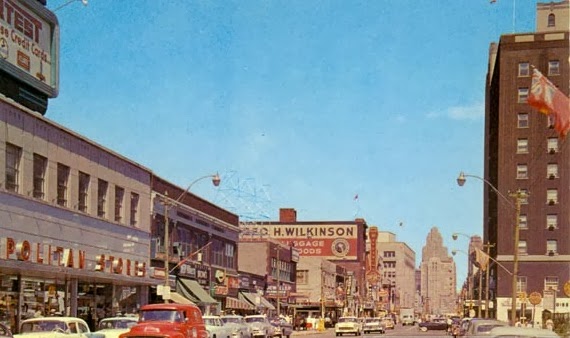
October 25: Eight women and one man are killed and another 81 people injured when an explosion rips through the Metropolitan Department store in Windsor, Ontario at 2.10 in the afternoon. Investigators will lay the blame on a leaky gas furnace.

November 2: The National Theatre opens in Montreal. Founded by Michel St-Denis, the school offers degrees in French and English. For more than fifty years, the school's alumni are a genuine Who’s Who in the world of performing arts.

November 5: Mack Sennett has died at the age of 80 in his Hollywood Hills, California home. “The King of Comedy” was born in Richmond, Quebec. He moved to Hollywood. He acted but was better known as the founder of the Keystone Studio and producer of more than 1,000 silent films and 25 talkies. He received an Oscar in 1938 for his slaptick comedy technique.

November 27: Prime Minister Diefenbaker attends the 11th annual Grey Cup match at the Empire Stadium in Vancouver.  The Edmonton Eskimos lose the Grey Cup to the Ottawa Rough Riders. The final score is 16 to 6. The game has to be cut short because fans flood the icy field only 41 seconds before the end of the period. Edmonton won't be in another playoff until 1973.

December 6: A Danish teenager is the two-millionth immigrant to arrive in the country since the end of World War Two. One out of every nine people living in Canada today is a post-war immigrant.

December 9: Canadian and Cuban trade officials meet and do business in Ottawa. The $15 million worth of goods that Cuba buys from Canada is expected to jump tenfold now that the Americans have adopted a trade embargo against the Caribbean nation.

December 15: Dorval International Airport has a new name and a $30-million terminal to go with it. The revamped airport is officially opened as a Trans-Canada Air Vanguard touches down on the freshly paved landing field. Dorval is called “the best airport in the world.” Many complain it’s too large to be any good. The airport will be renamed in honour of Prime Minister Pierre Trudeau in 2004.

Homegrown in 1961, the Rambler Classic 6 Super four-door sedan sells for $2,833 and the Classic 8 Super four-door sedan costs $2,995, fob Brampton, Ontario.

December 24:  Studebaker, Ford, Chrysler and GM all take notice as the first Rambler Classic leaves the new American Motors plant in Brampton, Ontario.  Exactly 11,500 imported Ramblers sell during the 1961 calendar year. Had they been made in Canada in 1960, Rambler would have bumped Ford of Canada's compact Frontenac to third place in the domestic compact car race.

December 31: Clarence Decatur Howe is dead at the age of 74. The second most powerful man in politics, the economic genius earned the nickname of “The Minister of Everything" as he guided the nation through World War Two.  He will be buried in the Mount Royal Cemetery in Montreal. The C.D. Howe think tank will be instituted in his honour.

 The $25 bill was issued in 1935 to mark the Silver Jubilee of King George V and Queen Mary. Windsor Palace is engraved on the obverse side.
December 31:  The Bank of Canada reports there are still 46 $25 bills in circulation and 41 $500 bills, even though they were withdrawn years ago.


Built in Oshawa, Ontario, Chevrolet's rear-engined compact Corvair was innovative but not a hit with consumers.