Showing posts with label Wilf Carter. Show all posts

Thursday, February 15, 2018

1904

From the big scrapbook of time, here’s a look at Canada in 1904-

Canadian Winter, 1931.
January 4: Margaret Nicol is born in Listowel, Ontario. She will grow up to become an artist, Marry Norman Macleod in 1940 and establish an arts centre for students attending the University of New Brunswick. She will die of cancer in 1949, leaving behind a rich legacy of more than 100 paintings.


March 11: The Ottawa Silver Seven beat the Brandon Wheat Kings two games to zip and lay claim to Lord Stanley’s Cup.

A modern seismometer.
March 21: At 2.04 Atlantic Time an earthquake with a magnitude of 5.9 on the Richter scale is felt through much of the Maritimes and New England. Covering some 400,000 square kilometres, the epicentre is Passamaquoddy Bay, separating the State of Maine from the Province of New Brunswick. Fortunately, damage is light—there are reports of damaged chimneys up and down the coast.


March 21: Jehane Patenaude Benoît is born in Montréal. She will study at the Cordon Bleu in Paris and receive a degree in food science from the Sorbonne in 1925. The renowned chef will write more than 30 cookbooks, run a vegetarian restaurant in the 1930s and become a well-loved TV chef on Radio-Canada and CBC-TV before her death in 1987.


April 8:  After 200 years of wrangling with Britain, France signs an agreement to give up some of its territorial claims on Newfoundland in exchange for cash and territories in Africa.


April 11: Founded in 1785 as the capital of the Colony of Cape Breton, the City of Sydney is incorporated. It will be merged into a regional municipality on August 1, 1995.

A 1904 Packard Model L. 

April 15: The first Toronto Automobile Show opens. Ford, Packard and Ivanhoe are among the exhibits on display. 


April 16: Marie-Rose Angelina Yvonne Lussier is born in Montréal. She will grow up to become an actress, change her name Fifi D’Orsay and star in many Hollywood movies. She will die of cancer in 1983 and be buried in Forest Lawn Cemetery in Glendale, California.


April 19: Fire breaks out at 58 Wellington Street West in Toronto. The flames spread quickly, fanned by strong winds. Firefighters from as far away as Hamilton and Buffalo, New York come to the rescue. By the time the blaze is out, 104 buildings have been destroyed and more than $10 million in damage is done. Astonishingly there is no loss of life in the Great Toronto Fire.


April 24: Paul-Émile Léger is born in Valleyfield, Québec. He will grow up to become a Cardinal in the Roman Catholic Church. Cardinal Leger will die of pneumonia in 1991 and his remains will be interred in Mary Queen of the World Cathedral in Montreal. 


May 14: Canada participates in the Olympics for the first time as an independent nation. Montréal fireman Étienne Desmarteau brings home our first-ever gold medal for the hammer throw.  George Seymour Lyon will also earn gold for golf during the Olympiad.


May 14: A pair of moose is imported to the Dominion of Newfoundland from the Canadian province of New Brunswick. The mighty beasts are not native to the island and with no natural predators, they will be responsible for many highway deaths over the years.


July 9: The Peterborough Lift Lock is open to marine traffic. The boat lift was built on the Otonabee River in the Town of Peterborough, Ontario.  Lock number 21 on the Trent-Severn Waterway, it features dual lifts and is the highest hydraulic boat lifts in the world, rising 19.8 metres.  Using 15,000 tonnes of metal and 20,000 square metres of concrete, the Peterborough Lock is the largest in the world. When complete, the waterway will stretch all the way to Lake Huron.


June 11: The Turbine docks in Sydney, Nova Scotia. The fastest ship in the world, she is the first steam turbine ship to ever cross the Atlantic Ocean. 


June 15: Medicine Hat in the North-West Territories is the scene of a great deal of excitement as drillers find a large gas field. An economic boom is expected.


June 18: The last of the square timber rafts departs the nation’s capital, headed down the Ottawa River.


June 24: The North West Mounted Police become the Royal Northwest Mounted Police by decree of King Edward VII, as the force marks 30 years of service. The nation’s law and order organization will become the Royal Canadian Mounted Police in 1920.


July 3: The Intercolonial Railway begins service of its posh new Halifax to Montréal passenger service. The trip is 1,400 kilometres long. The Ocean Limited will run six days a week and stop only at selected urban centres along the way.


July 22: Donald Hebb is born in Chester, Nova Scotia. He will grow up to be an eminent psychologist, spending his entire life studying neurons and their connection to learning. The Father of Neuropsychology will be laid to rest in 1985.


August 17: The Ford Motor Company of Canada, Limited opens its doors in Windsor, Ontario. The deal struck between Henry Ford and Gordon McGregor will endure into the 21st Century. 


August 31: The Canadian Pacific Railway begins its annual Harvest Excursion from Nova Scotia and New Brunswick. Hundreds of young men from the Martimes take the trip to the Northwest (Saskatchewan and Alberta) to help reap the grain. It is hoped that “weird tales from along the route of fighting, stealing, blood, and carnage will be lacking this year.”


September 2: Thousands of Londoners are on hand to welcome Captain John Voss as he docks in a 10.9-metre red cedar dugout Nootka Indian canoe. The 65,000-kilometre voyage of the Tilikum, from Vancouver, by way of Australia, has taken three years, three months and twelve days. The craft will go on display at the Maritime Museum in Victoria, British Columbia on January 8, 1965.


September 7:  Matthew Henry Halton is born in Pincher Creek, Alberta. He will grow up to become a newspaper journalist and start work as a radio reporter for the CBC in 1938. His reports from the front during World War Two will make him a household name. The internationally renowned broadcaster will die in 1956.


September 14: Francis “Frank” Amyot is born in Ottawa. He will grow up to become an athlete, winning the only gold medal for Canada at the 1936 Olympics in Berlin. The world’s best canoe racer will be inducted into the Canadian Sports Hall of Fame in 1955 and die in 1962.


September 29: Lord Grey is named the new Governor General. He will replace his brother-in-law, Lord Minto.  


October 1: The price of kerosene oil for lamps in New Glasgow, Nova Scotia is 26 cents for an Imperial gallon or 5.7 cents a litre.


October 8: Edmonton is incorporated as a city in the North-West Territories. Established in 1795 as a Hudson Bay Post, the current population is 8,350 people. 

The CGS Neptune in Hudson Bay.


October 12: The CGS Neptune arrives in Halifax harbour. The ship has returned from the Arctic where it laid claim for Canada to the eastern Arctic and Hudson Bay. A Royal North-West Mounted Police detachment was established in Fullerton Bay.


October 20: Thomas Clement Douglas is born in Scotland. He will come to Canada with his family when he is six. He will grow up to become a Baptist minister and then enter politics to become leader of the Cooperative of Commonwealth Farmers—today’s New Democratic Party. He will be premier of Saskatchewan from 1944 to 1961 and introduce the radical idea of universal health care to its citizens.  Leading the NDP federally until 1979, he will die of cancer in 1983. Douglas will be voted the most influential Canadian of the 20th Century in a 2004 survey conducted by the CBC.

A Laurier election poster. 

November 3: Prime Minister Sir Wilfred Laurier and his Liberals win the federal election, taking Robert Borden and his Conservatives down to defeat. The Grits hold 139 seats and the Tories will have 75 when the House of Commons next sits. 

Sunday Drive by Jean-Paul Lemieux.

November 18: Jean-Paul Lemieux is born in Québec City. He will grow up to become an artist—one of the most important in  the 20th Century.


November 26: Armand Frappier is born in Valleyfield, Québec. His mother will die of tuberculosis when he is quite young and he will vow to eradicate the disease by becoming a doctor. Armand will become a world expert in the field of tuberculosis, establishing the Institut de microbioligie et d’hygiène de Montréal and serve as director for nearly 40 years. King George VI will make him an officer in the Order of the British Empire. Dr. Frappier will die in 1991. The Québec government will establish the Frappier Prize in 1993, an award given to scientists in honour of their careers. Canada Post will honour the pioneer physician with a stamp in 2003.


December 15: The Royal Navy announces it will close its Imperial dockyard in Halifax by year’s end. More than 300 men will lose their jobs as a result. It is hoped the newly formed Canadian Navy will take over the sprawling facility, established in 1770. 


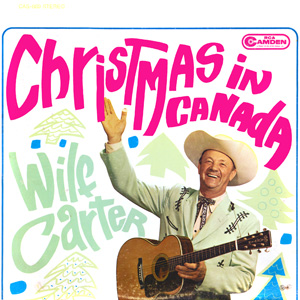
December 18: Wilfred Arthur Charles Carter is born in Port Hilford, Nova Scotia. He will grow up to become a country singer, famous for his three-in-one yodeling technique. Wilf will win many awards and perform for millions of fans until he is 86 years old and die in 1996 at the age of 91.


December 31: The year has closed and workers at the Ford Motor Company of Canada, Limited has built approximately 25 horseless carriages, though none has sold, yet.


Sunday, January 13, 2013

1996


From the big scrapbook of time, here’s a look at Canada in 1996-
The Chrysler Intrepid is the seventh best-selling car in Canada this year.
 January 14: Ottawa and Israel announce a free trade agreement.

 
January 14: Delayed from last fall, the 16th Genie Awards are held in Montreal, to honour the best films of 1995. Best Motion Picture Genie goes to Le Confessional. A Best Actor Genie goes home with David La Haye for L’Enfant d’eau and a Best Actress Genie is given to Helena Bonham Carter for her role in Margaret’s Museum.

January 15: The Ottawa Senators have a new home as a beautiful arena opens. Corel Centre will have its name changed to Scotiabank Place in 2006.

February 19: the $2 coin—better known as the toonie – is introduced to the public. The bi-metallic coin replaces the $2 bill and features Queen Elizabeth II and a bear on the reverse side. The Royal Canadian Mint says the bear’s name is Churchill. 
 
January 26: Sally Gribble, founder of Mothers Against Drunk Driving, is dead.

February 7: Bob Rae, former NDP Premier of Ontario announces he is leaving politics.

February 9: Artist Henri Masson is dead in Ottawa at the age of 89. Originally from Belgium, fell in love with the Canadian countryside. His paintings of ordinary, everyday activities show his intimacy and passion for the Gatineau Hills and its people.

February 14: The Tickle Trunk closes for the last time as the final episode of Mr. Dressup is taped. The popular kids’ show has aired on the CBC for 29 years. Ernie Coombs, a.k.a. Mr. Dressup, will tour university campuses, addressing loyal fans who grew up with Casey and Finnigan, until he dies of a stroke in 2001.

February 21: Playwright Gordon Armstrong is dead of an AIDS-related illness at the age of 35. He leaves behind a full legacy of theatre pieces including the popularly acclaimed play, Blue Dragons.


February 27: The Los Angeles Kings do the unthinkable. They trade superstar Wayne Gretzky to the St. Louis Blues.

February 29: The first WestJet flight leaves Calgary headed west. The no-frills airline will be the second largest air carrier in Canada by 2009, worth more than $1 billion, boasting 7,500 employees who choose to be partners in profit-sharing benefits rather than be members of a union.

March 10: Singing legend Anne Murray hosts the Juno Awards, held at the Copps Coliseum in Hamilton, Ontario. Alanis Morissette wins a Juno Single of the Year for You Ought to Know, another for Jagged Little Pill, voted best album and a Best Female Artist Juno. Colin James wins a Best Male Artist Juno.  Blue Rodeo gets a Juno as Group of the Year. 

March 11: The last NHL game is played in 72-year old Forum and the Habs whip the Dallas Stars before a delighted hometown crowd. 

March 17: The new Molson Centre is open in Montreal. To break in the ice, the Montreal Canadiens play host to the New York Rangers.

March 26: The nation comes to a standstill when the ANIK E-1 satellite malfunctions.  TV, radio and telephone service is disrupted from coast to coast to coast for a good 20 minutes.

April 5: In Vernon, British Columbia an angry Mark Chahal bring out a firearm and shoots nine family members before turning the weapon on himself.

April 23: Nova Scotia, New Brunswick and Newfoundland and Labrador decide it is more practical to drop their provincial sales taxes and combine them with the federal government’s GST. The new blended tax will be called the Harmonized Sales Tax or HST for short.
 
Salli Terri won a Grammy in 1959 for Duets with the Spanish Guitar.
 May 5: Mezzo soprano Salli Terri is dead at the age of 71. Born in London, Ontario, she wowed the world with beautiful voice and sang at the Coronation of Queen Elizabeth II in 1952. The winner of many awards, she made numerous albums and taught at UCLA. She is best remembered for being the voice of the cow in the movie, Mary Poppins.
 
May 7: Lucky residents of Ontario will pay 30 percent less in provincial income taxes. 

After 25 missions, Endeavour will be retired in 2012.

May 19: Captain Marc Garneau is aboard the NASA space shuttle Endeavour. This is the Quebec City native’s second trip off the planet. The astronaut will make another trip in 2000—logging 678 hours in space--before retiring from the Canadian space programme.

Robert Christie 1913-1996.

May 22: Actor and director Robert Christie has died. He is best remembered for his portrayal of Sir John A. MacDonald in the 1949 play, Riel. He appeared at the Old Vic, on Broadway and at Stratford as well as in the CBC-TV series Hatch’s Mill.

May 29: The RCMP in Halifax charge six Taiwanese sailors with two counts of murder on the high seas. The ship’s officers are alleged to have thrown two Romanians overboard after the stowaways were discovered aboard the MV Maersk Dubai.

 
June 10: The Office de la Langue Francais reintroduces to the “language police” to enforce the French-only sign laws of Quebec.

June 17: Liberal MP Sheila Copps handily wins her Hamilton-Wentworth seat in a by-election. She had resigned on principle when Prime Minister Chretien reneged on his promise to drop the GST.

Dr. Robert Thirsk.
June 20: Astronaut Dr. Robert Thirsk is on the space shuttle Columbia. The British Columbia native will spend 17 days in space and perform 43 experiments in Skylab before returning to Earth. 

June 24: Youth in Quebec City clash with riot police. More than 80 protesters are arrested and damage is estimated at more than $1 million. Police blame the group Food not Bombs for the melee.


Canada Day: The Winnipeg Jets bid “adieu” to their Prairie home. Next season they will play as the Phoenix Coyotes.

 July 5: Fred Davis, host of CBC-TV’s Front Page Challenge for nearly 38 years, is dead of a stroke at the age of 74.

July 19: The Games of the XXVI Olympiad open in Atlanta, Georgia. Celine Dion opens the 197-nation extravaganza by singing, The Power of the Dream. Our athletes do us proud by coming home with 22 medals--including three gold. 

Damage from the flood totalled $1.5 billion.
 July 20: The biggest flash flood of the 20th century hits the Saguenay-Lac-Saint-Jean region of Quebec. The torrential downpour cases a dam to break. Some 16,000 citizens are evacuated. Nearly 1,700 homes are destroyed or damaged and ten people are killed in mudslides.

Wayne Gretzky suits up for the Rangers.

July 26: The Great One signs on with the New York Rangers.

August 8: It’s official. The new Canadian Consul General in Los Angeles is former PM Kim Campbell.

October 2: Former Premier of Quebec, Robert Bourassa has died of malignant melanoma at the age of 63. An ardent federalist and defender of Francophone rights, he will be interred at Cimitiere Cote-des-Neiges in Montreal. 

October 4: There’s scandal in Ottawa as Defence Minister David Collenette resigns after admitting he broke ethics rules when he spoke to a judge.

Colleen Peterson, 1950-1996.
 October 9: Country singer Colleen Susan Peterson is dead of cancer at the age of 45. The Peterborough, Ontario native had many hit songs and was a member of the band Quartette. She will be inducted into the Canadian Country Music Hall of fame in 2000 and the Colleen Peterson Songwriting Award will be established in her honour in 2004.

October 11: Labour leader Joe Morris is dead in Victoria, British Columbia at the age of 83. He spent his entire life struggling to improve the conditions of the common working person. He was named to the Order of Canada in 1984.


October 17: Women’s rights activist Laura Sabia is dead of Parkinson’s Disease at the age of 70.  She headed Prime Minister Pearson’s Royal Commission on the status of women in 1967 and was the first president of the National Action Committee on the Status of Women (NAC). The Order of Canada recipient was an outspoken and longtime columnist for the Toronto Sun.


November 4: Heinz purchases the trademarks for Alpha-Getti and Zoodles from Libby. These popular pasta dishes will now be produced in Leamington, Ontario.

November 5: Jean-Louis Roux, Lieutenant Governor of Quebec, is forced to step down from office after pictures of him wearing a swastika at Nazi rallies in the 1930s are released by the press.

November 19: Morse Code has been made obsolete by advancing satellite technologies. The Coast Guard closes the ship-to-shore radio station in Ketch Harbour, outside of Halifax, after 91 years of service. 

November 27: The 17th Genie Awards are held to honour the best films of 1996. A Genie goes to Lilies for Best Motion Picture. William Hutt receives a Best Actor Genie for Long Day’s Journey into Night and Martha Henry earns a Best Actress Genie for the same film. 

December 16: The PM apologizes publicly to the nation for his flip-flop in the GST but the tax on goods and services is here to stay.


December 5: Wilf Carter, a.k.a. Montana Slim, has died at his ranch in Arizona at the age of 91. Born and raised in Nova Scotia, he ran away from home when he was 15 and learned to be a cowboy in Alberta. His singing incorporated his unique yodel and his recording career spanned more than 50 years. Wilf will be remembered for such immortal classics as Blue Canadian Rockies and You are My Sunshine.

Sitting pretty in the Number Five sales spot is the Toyota Corolla.

The top ten selling cars this year are the Chevy Cavalier, Honda Civic, Pontiac Sunfire, Ford Escort, Toyota Corolla, Ford Taurus, Pontiac Grand Am, Chrysler Intrepid, Honda Accord and the Toyota Camry.

Copyright to James C. Mays
All rights reserved 2011