Sunday, March 17, 2013

1982

 From the big scrapbook of time, here’s a look at Canada in 1982- 


January 1: The average annual salary for a woman is $17,439 while a man’s average salary is $31,655. StatsCan reports 17.5 percent of families bring less than $20,000 a year and that 64 percent bring home more than $50,000 annually.


January 11: Big changes for news junkies as the CBC moves The National to 10 pm. The evening newscast is followed by The Journal at 10.22 pm.

January 12: The recession is bad enough that Ottawa unveils a new Ministry of State for Economic Development. Numerous other regional economic agencies are drastically overhauled.

Clifford Olsen will spend the rest of his behind bars in the Special Handling Unit of the Sainte-Anne-des-Plaines Correctional Facility in Quebec.

January 14: Clifford Olden is sentenced to life in prison. The country’s most notorious serial killer’s family received $100,000 because Olden cooperated and showed the RCMP where his victims were buried. He will die in 2011.

January 17: Record cold temperatures blanket much of the nation. The day will be remembered as “Cold Sunday.”

January 20: Buses and the Metro are rolling, again. Montrealers are thankful that the 6,800 transit employees at the MUCTC have voted to end their six-day illegal strike.

February – The first cases of AIDS are reported in Canada.


February 15: Ocean Ranger, an oil drilling rig located 265 kilometres off the east coast of Newfoundland, is toppled during a wild storm. The structure collapses, killing 84 workers. An inquiry will later determine there were inadequate safety procedures in place and minimal safety equipment on the rig.
Ticket to Heaven is nominated for 14 Genies. It will win four
 March – The Genie Awards are held at the Royal Alexandra Theatre in Toronto.  Best picture is Ticket to Heaven. Best Actor is Nick Mancuso who played the lead in Ticket to Heaven. Best Actress goes to Margot Kidder for her role in Heartaches.
The Supreme Court of Canada has sat in this building since 1946.

March 4: The Supreme Court of Canada gets its first woman justice as Prime Minister Trudeau appoints Bertha Wilson to the bench.  

March 5: Steve Padborski wins the World Cup Downhill Championship in Aspen Colorado. He’s the first North American to ever win the prestigious prize.  He will retire from professional sport in 1984 at the age of 26.

March 25: Edmonton Oiler Wayne Gretzky becomes the first NHL player to score 200 points in a season. He sets the record when he scores two goals and two assists against the Calgary Flames.

March 26: Catherine and Ian Rankin of Oakville, Ontario become the proud parents of the world’s first test tube babies when twin boys are born to them.

March 31: The nation’s first fibre optic cable factory opens in Saskatoon.
Loverboy wins six Junos, a recodrd that still stands in 2013.
April 14: The Juno Awards are held in Toronto.  Loverboy cleans up with best album and best group of the year. Bryan Adams is best male vocalist and Carole Pope is best female vocalist. Single of the year is Eyes of a Stranger by the Payola$. Anne Murray is best female country singer and Eddie Eastman earns a Juno as best male country performer.

April 15: Protests by animal rights groups manage to shut down the annual spring seal hunt in Newfoundland. The traditional hunt has been taking place for hundreds of years.

April 17: Queen Elizabeth II is on hand in Ottawa to declare the constitution repatriated to Canada. Enshrined in the new constitution is the Charter of Rights and Freedoms.  Quebec does not sign the deal.

April 20: Business tycoon Peter H. Pocklington and his wife Eva are held hostage in their Edmonton home for nearly twelve hours by a man who demands $1 million. Police storm the house, wounding Pocklington.

May 6:  Kyle Shewfelt is born in Calgary. He will grow up to be a gymnast winning gold for Canada at the 2004 Olympic Games held in Athens, Greece.

May 9: Gilles Villeneuve, the country’s fabled Formula 1 race car driver, is killed while qualifying for the Belgian Grand Prix. He is 32 years old. Son Jacques will follow in his father’s footsteps.

May 16: The New York Islanders beat the Vancouver Canucks four games to zip and earn the right to keep Lord Stanley’s Cup for the next year.

May 18: CCM, the sporting goods giant, is floundering in $20 million of debt. Workers are asked to take a $3-an-hour pay cut, pay half of their health insurance and cut holiday pay. Fed up with years of poor management, they go on strike. The plant will never reopen and CCM will be eventually be sold to Proycle in St. George de Beauce, Quebec.

May 18: Bombardier Inc. of Montreal wins a $1 billion contract to build 825 subway cars for the New York City Transit Authority. It is the biggest export contract in history for a Canadian manufacturer.

May 21: After having been arrested and accused of murdering four children in a Toronto hospital, nurse Susan Nelles’ case is dismissed by a judge who rules that the Crown’s evidence is too weak. She will be exonerated and the government will be required to pay her legal fees.


May 23: Brother Andre is beatified by Pope John Paul II. This is the first step toward sainthood. During his lifetime Brother Andre was a member of the Holy Cross Brothers order in Montreal and was reported to have healed thousands of sick people.

May 30: The Big M Drug Store in Edmonton opens for Sunday business in defiance of the Lord’s Day Act of 1906 that prohibits commerce on Sunday. The national blue law will be ruled unconstitutional by the Supreme Court of Canada on April 24, 1985.

June 10: Montreal has a new CFL team, owned by distillery king Charles Bronfmann. The Concordes replace the defunct Allouettes. Despite the hometown advantage, they lose to the Toronto Argonauts in their first game.

June 12: The first Lotto 6/49 draw-- with a jackpot of $500,000-- takes place tonight. It is the national lottery allows people to choose their own numbers.


June 28: Parliament passes the Freedom of Information Act, giving Canadians access to private information previously denied to them.

July 8: The Toronto Stock Exchange hits a four-year low. The nation is in the worst business slump since the Dirty Thirties and 11 percent of Canadians are looking for jobs. On the bright side, inflation drops from 12.5 percent to 10.8 percent. The dollar will continue to drop, skidding to 76.8 cents US by year’s end.
Anik is the Inuit word for brother.

July 15: Anik 1, the nation’s first communication satellite, is retired after ten years’ of faithful service.  It will be replaced by Anik D.

July 26: Karen Dianne Baldwin of London, Ontario is crowned as the 31st Miss Universe. The 18-year old, 175-centimetre tall model comes home with $150,000 in cash and prizes.
Igor Gouzenko's story was made into a 1948 Hollywood thriller.

June 28: Igor Gouzenko is dead of a heart attack in Mississauga, Ontario at the age of 63. He was a Soviet spy who defected to Canada in 1945. The stories he told officials about the Soviet Union’s plans to take over the world triggered the Cold War.

August 23: The Turkish military attaché to Canada is assassinated in Ottawa by Armenian terrorists while on his way to work. The murder of Colonel Altikat has yet to be solved.

October 4: Pianist Glenn Gould is dead today at the age of 50. The universally acclaimed artist has 65 albums to his credit. He is best known for his ingenious interpretations of J.S. Bach.
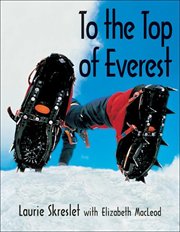
October 5: Laurie Skreslet becomes the first Canadian to reach the top of Mt. Everest. The expedition had been five years in the making and cost $3 million.
The Honourable John Robarts was the 17th Premier of Ontario.

October 18: After a series of major strokes, former Ontario Premier John Robarts uses a shotgun to take his own life. 

October 26: By Royal assent, the Governor General declares that from this day forward,  July 1st, formerly known as Dominion Day shall now be called Canada Day.

October 31: Margeurite Bourgeoys is officially declared a saint by Pope John Paul II. The woman who devoted her entire life to serving the poor is Canada’s first female saint.
The Schefferville mine opened in 1954.

November 2: Brian Mulroney, president of the Iron Ore Company of Canada, Limited, announces that the firm’s mining operation in Schefferville, Quebec will be closed for good. Thousands will lose their jobs.

November 5: Some 10,000 Chrysler Canada workers walk off the job at plants in Windsor, Brampton and Bramalea. The CAW members want higher wages.
Canadian content, a.k.a. Cancon, is often referred to as 'the maple syrup law' by those who don't like it.

November 16: The Applebaum Report to the House of Commons recommends higher Canadian content on domestic television.

November 28: Despite a driving rainstorm and bitter cold at Exhibition Stadium in Toronto, the Edmonton Eskimos take home the Grey Cup for the fifth year in a row, having beaten the Toronto Argonauts 32 to 16.

November 29: Olympic gold medalist Percy Williams is dead in Vancouver at the age of 74. Despite a rheumatic heart he won two gold medals for Canada at the 1928 Olympics in Amsterdam. In 1929 he won 21 of 22 races during a 21-day span on the US indoor circuit and in the following year won the 100-yard dash at the British Empire [Commonwealth] Games held in Hamilton, Ontario.

December 4: Prisoners riot at the Archambault Federal Penitentiary in Laval, Quebec. Before it’s over, three guards will be murdered—one who was finishing his last shift before retiring. The two prisoners who started the fracas commit suicide.

December 10: Canada is one of 160 nations signing the UN’s Convention of the Law of the Sea. Our coastal jurisdiction now begins 370 kilometres offshore.

December 12: The 38-day strike at Chrysler Canada is over as employees vote in favour of a new contract.

December 17: The federal government will pay Yukon natives $183 million to settle all outstanding land claims.

December 30: Kristen Kreuk is born in Vancouver. She will grow up to become a
n actress best known for her role as Clark Kent’s love interest in the TV series Smallville.

December 31: Autoworkers built 1.29 million vehicles this year and a full 86 percent of them are exported. We buy 713,000 new cars and trucks but just a shade more than two thirds of them are domestic. A full 25 percent of Canadians will buy a new car that is made in Japan. There are 14.3 million vehicles registered for daily driving.


Thursday, March 14, 2013

1983


From the big scrapbook of time, here’s a look at Canada in 1983--
The 1983 Alliance is a joint effort from American Motors and Renault. The stylish compact is named Car of the Year by Motor Trend magazine.  The four-door Limited carries a $9,145 price tag.


January 1: Though it has been in use since 1976, the federal government adopts the Metric System as our official weights and measurements.

Joe Clark was Canada's  16th and youngest Prime MInister, sworn into office when he was 39 years old.

January 2: Parliament reconvenes. There is a standing ovation for The Right Honourable Joe Clark as he enters the House of Commons. To avoid tearing his party apart, he has announced he will resign as leader of Her Majesty’s Loyal Opposition and as leader of the Progressive Conservative Party as well. 


January 7: Statistics Canada reports 12.8 percent of all Canadians are out of work. That translates to 1,454,000 people collecting pogey. Another 150,000 have grown discouraged and quit looking altogether. It is the highest unemployment figure seen in the country since the Dirty Thirties. 

The grisly murder of JoAnn Thatcher by her politician husband will be made into a CBC-TV movie in 1989, starring Kate Nelligan and Kenneth Walsh.
 January 21: JoAnn Thatcher, estranged wife of Saskatchewan MLA Colin Thatcher, is brutally slain in her Regina residence. It will take the Mounties 16 months to gather enough evidence to charge the politician. He will be found guilty of first-degree murder serve 25 years in prison before being paroled in 2006. 

Point Lepreau is the only nuclear generator in Atlantic Canada.
 January: The Point Lepreau Nuclear Generating Station comes on line in New Brunswick. Located southwest of Saint John on the north shore of the Bay of Fundy, the facility will add 680 megawatts to the NB Hydro power grid. In 2005, $1.4 billion will be spent to upgrade the plant and keep it in operation for another 20 years. 


February 1: Pay television debuts as First Choice and Premier Choix begin broadcasting.

February 10: Ottawa and Washington sign a deal that permits the US military to test unarmed nuclear missiles over Western Canada. Many citizens are alarmed that our sovereignty is being undermined.


March 2: Philips Electronics unveils the latest way to listen to music as it shows off the compact disc a.k.a. the CD Player. The unit costs $1,000 and comes with all 12 CDs, also manufactured by Philips. 

March 4: Bertha Wilson is appointed to the Supreme Court of Canada. She is the first woman to hold the position.


March 5: Steve Podborski wins gold for Canada at the World Cup of Skiing. He is the only North American to ever win the event and he will win it eight times.


April 5: The Juno Awards are hosted by Burton Cummings and Alan Thicke.  Broadcast live on the CBC, 4.4 million viewers watch the music award extravaganza. Album of the Year is Get Lucky by Loverboy, best single is  Eyes of a Stranger by the Payola$. Carole Pope takes home a Juno for best female vocalist and Bryan Adams wins one for best male vocalist.


April 7: Kyle Labine is born in Brampton, Ontario. He will grow up to be a Hollywood star and hold the distinction of being the only actor to be in a Freddy film, a Jason flick and a Michael movie, too.


April 11: Statistics Canada reports that the national unemployment rate for March has reached an all time high of 13.6 percent. That translates into 1,658,000 people unemployed. The figure does not include those who have given up looking for work.

The Sky is Falling will tell the story of the Squamish Five when published in 2010.

April 12: Five Vancouver-area residents, members of an urban terrorist group called Direct Action—a.k.a. The Squamish Five--are charged in a Toronto court with last year’s bombing of the Litton Systems plant in Toronto that builds guidance systems for cruise missiles.


April 12: The controversial movie If you Love this Planet wins an Oscar at the Academy Awards.  The documentary was produced by the National Film Board and shows the dark side of nuclear war. The US State Department classifies the film as propaganda and 'surpresses' the movie. 

April 23: More than 80,000 angry citizens across the nation come out to protest the American government’s plan to test its Cruise missiles in Western Canada.

This will be the last year for the Chrysler New Yorker to be built in Windsor, Ontario.
May 9:  The 5,000,000th Chrysler car rolls out the factory doors in Windsor, Ontario. Company chairman Lee Iacocca is on hand for the milestone as the white New Yorker makes its way down the line.

May 09:  Donald Marshall is acquitted of murder. The Mi'kmaq man from Cape Breton Island spent eleven years in a Nova Scotia prison for a homicide he did not commit.
A traditional lobster trap.

May 11: Angry about new restrictive lobster quotas, a mob of 100 fishermen burn and sink two federal fisheries patrol boats in West Pubnico, Nova Scotia.


May 17:  The Edmonton Oilers make the playoffs for the first time. They lose the Stanley Cup to the New York Islanders four games to zip, their fourth Stanley Cup victory.

May 25: French becomes an official language in Manitoba. Francophones in the Keystone Province were stripped of that right in 1890, twenty years after Manitoba entered into Confederation.

June 2: A flash fire in the washroom forces Air Canada Flight 797, on its way from Houston to Toronto, to make an emergency landing in Cincinnati, Ohio. The disaster claims the lives of 23 of the 41 passengers on board. Folk singer Stan Rogers dies in the fire as he helps others to safety.  The Stan Rogers Folk Festival will be held in his memory each summer in Canso, Nova Scotia.


June 9:  The Supreme Court rules that Canadians who are educated in English have the right to send their children to English-language schools if they live in Quebec. Bill 101, the law protecting the French language in Quebec, is ruled to be unconstitutional.

June 11: A 44-year old lawyer with no political experience has won the leadership of the Progressive Conservative Party, beating out former Prime Minister Joe Clark. The vote is 1,584 to 1,234.  Brian Mulroney must now get himself elected to the House of Commons.

June 12: Hollywood star Norma Shearer is dead at the age of 82. Born in Montreal, she moved to Tinseltown early and first appeared on the silver screen in 1920. The Oscar-winning actress will be laid to rest in Forest Lawn Cemetery, next to actress Jean Harlow.
The price tag for BC Place is $126 million.

June 19:  BC Place is officially opens in False Creek, British Columbia. As the new home of the BC Lions, the domed stadium seats 60,000. The facility will be used for the 1986 World’s Fair and the 2010 Winter Olympics.

June 22: Prince Charles and Princess Diana are in Canada for an 18-day royal visit. Despite the fact that acid rain is an extremely sensitive subject with our American neighbours, the Prince of Wales warns that the phenomenon is a major hazard as he speaks to a group of 600 Kinsmen.

June 27: Alden Nowlan is dead. The noted poet won the Governor General’s Award for his book Bread, Wine and Salt. He was the Poet-in-Residence at the University of New Brunswick.

July 13: Author Gabrielle Roy is dead at the age of 74. Born in St. Boniface, Manitoba, her novel Bonheur d’Occasion--translated into English as The Tin Flute-is an unvarnished look at the working poor in the St. Henri neighbourhood of Montreal. She won the Governor General’s Award for literature three times and is considered to be the most important Francophone writer of the 20th Century.

July 15: The federal government approves the US government’s request to test the Cruise Missile in Canadian air space.

July 23: Air Canada Flight 143, en route to Edmonton from Montreal, is forced to land at a mothballed Canadian Forces Base in Gimli, Manitoba. Because of a mix-up in Metric and Imperial measurements, the Boeing 767 ran out of fuel 12,000 metres in the air.

July 29:  Raymond Hart Massey is dead of pneumonia at the age of 87. Born in Toronto, the son of Massey-Harris magnate Chester Massey, Raymond was a Broadway sensation and Hollywood star best remembered for his portrayal of Abraham Lincoln.
Canadian astronauts in 2007.

August 3:  The National Research Council tells the press that Canada’s new space programme has brought a tidal wave of applications. Only two of the 1,500 people will be trained as astronauts and go into outer space on NASA missions.

August 12: There are changes on Parliament Hill as Prime Minister Trudeau shuffles his cabinet for the third time this year. There are five new faces and eight ministers are assigned to other portfolios.

August 23: Canada and the United States sign a joint treaty to study the movement patterns of pollutants that may cause acid rain.


September 5:  All flights into Canada by Aeroflot, the official airline of the Union of Soviet Socialist Republics, are suspended. The measure is to protest last week’s shooting down of a South Korean Airline flight that strayed into Soviet airspace. The death toll on the ill-fated flight was 269.
The Right Honourable Pierre Elliot Trudeau, Prime Minister of Canada and the Right Honourable Margaret Thatcher, Prime Minister of the United Kingdom.
September 26: British Prime Minister Margaret Thatcher is in Ottawa. She addresses a joint session of Parliament.

October 2: Lee Iacocca, Chrysler’s world chairman, is on hand in Windsor, Ontario to dedicate the revamped factory. Some $400 million has been spent to make this one of the most technologically advanced manufacturing facilities in the world. Now it will build mini-vans. The factory has been in operation since 1929.

October 7:  Chrysler makes automotive history as the first front-wheel drive T-115s roll out the factory doors in Windsor, Ontario. The trucks are better known as the Dodge Caravan and Plymouth Voyager.

October 16: Folks in Windsor, Ontario now have a television station of their own to watch as CHWI, Channel 16 takes to the airwaves. In 2013 the station will be known as CTV2.


October 20: Author Yves Theriault is dead at the age of 67. He wrote Agaguk, a story of conflict between the Inuit and White cultures. The book is his sixth novel. It will sell more than 300,000 copies, be translated into seven languages and be made into a blockbuster movie.
The Canadian Broadcasting Corporation is the nation's public broadcaster.

October 24: The Minister of Communications, Francis Fox, orders CBC Television to increase Canadian content to 80 percent during prime time viewing hours.

The first minivan off the line will be on display in the Walter P. Chrysler Museum in 2013.

November 2: The Dodge Caravan and the Plymouth Voyager debut. Built in Windsor, Ontario, the Magic Wagons will be a big hit for Chrysler.

November 10: Microsoft Inc. releases Windows. The Globe and Mail speculates that this operating system may change the way people use computers.

Margaret Trudeau will publish her memoirs in 1979.

November 16: Separated for six years, Margaret Trudeau files for a divorce from her husband, Prime Minister Pierre Trudeau.

November 27:  The Toronto Argonauts whip the BC Lions 19 to 17 to take home the Grey Cup.

December 23:  Jeanne SauvĂ©, former Speaker of the House of Commons, is appointed to the position of Governor General. The Saskatchewan-born broadcaster is the first woman to be named Vice Regal, Canada's head of state.
Built in St. Thomas, Ontario, the 1983 Ford EXP costs $7,740 and the Sport Coupe lists for $9,234.


Copyright to James C. Mays
All rights reserved 2001