Showing posts with label Bluenose II. Show all posts

Thursday, November 28, 2013

1963


From the big scrapbook of time, here’s a look at Canada in 1963-

January 1: The minimum hourly wage for a factory worker is 95 cents in Charlottetown, 70 cents in Montreal, 75 cents in Winnipeg and $1 in Toronto and Vancouver. In some provinces women are paid less then men, even though they perform the same tasks.

January 14: Planned Parenthood holds its very first meeting in Toronto. Birth control is a grey area in the law; no one knows if the organization is even legal. 

Hercules Missiles can travel at 1,600 kilometres an hour, reach an altitude of 21 kilometres and hit targets within a 40-kilometre range.

February 4: Prime Minister Diefenbaker refuses to permit Americans to place nuclear missiles on Canadian soil. Douglas Harkness, the Minister of Defence, resigns in protest.

February 5: The Tory government collapses over the nuclear missile issue. Parliament is dissolved and a general election is called. 

March 1: Simon Fraser University is founded in Vancouver. 


February 11: Rambler Canada begins exporting right-hand drive passenger cars to Commonwealth countries, including the UK. 

The Eversweet brand of oleomargarine first appeared in stores in 1925.
March 1: Members of the Provincial Parliament in Toronto will consider permitting the sale of coloured margarine. Ontario law requires that margarine be white in order to distinguish it from butter. Little packets of yellow colouring can be added by the homemaker. This is a hot-button issue with housewives and MPPs are demanding a free vote on the issue. 

March 15: The Dominion Bureau of Statistics reports that 868 families in Ontario purchase a new washing machine every week. A new Inglis, with five wash-and-rinse cycles sells for only $269 plus the trade-in of your old wringer washer.

March 18: Grey is the “hot” colour in men’s wear this season. The narrow 41.2-millimetre (1 5/8-inch) brim hat is the fashion leader but teens are wearing an even more daring narrow-brimmed chapeau.
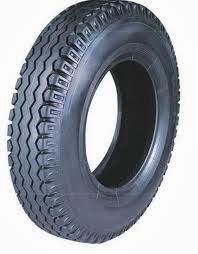

March 21: Woolco offers customers nylon tires for $11.95 each. Shock absorbers sell for $12.45 a pair, mufflers are only $9.98 and seat belts cost $6.96 each. Prices include installation.


March 26: It’s a boy for Real and Zelande Voisine. Joseph Armand Roch Voisine is born in Edmunston, New Brunswick. He will grow up to become an international hot ticket singer with mega hits like Helene and I’ll Be There.


March 28: Willys Canada Limited announces it will begin to manufacture the new Jeep Gladiator trucks and the groundbreaking four-wheel drive Wagoneer station wagons in Windsor, Ontario. Willys has been building Jeeps at its Central Avenue plant in Windsor since 1959.

Tommy Douglas is the father of Medicare. He will be recognized as the most important political figure of the 20th Century.
March 29: More than 15,000 concerned citizens jam Maple Leaf Gardens in Toronto to hear charismatic New Democratic Party leader Tommy Douglas speak. It is the largest political rally ever held.

Nobel Peace Prize winner Lester Bowles Pearson will be our 14th Prime Minister.

April 8: The voters have spoken and the Liberals will form a minority government—propped up with the help of Tommy Douglas and the New Democrats.

April 18; The Toronto Maple Leafs take home Lord Stanley’s Cup after beating the Detroit Red Wings four games to one. 

April 18: Eric McCormack is born in Toronto. He will grow up to become an actor best known for his TV role as Will Truman on the hit comedy series Will & Grace.


April 20: The IV Pan American Games open in San Paulo, Brazil. Our athletes will make us proud, coming home with 63 medals—the most we’ve ever won.


April 20: The Front de liberation du Quebec demands independence from Canada.  FLQ members set off bombs in Quebec today—the first of 200 acts of civil disobedience it will unleash on the public in hopes of achieving its goals. 

Prime Minister Pearson and US President John Kennedy.
April 22: Lester Bowles Pearson is sworn in as the nation’s 14th Prime Minister. The World War Two spy, code named ‘Mike,’ is a Nobel Peace Prize winner. He will be PM until he steps down in 1968. 


April. 27: Cali Timmins is born in Montreal. She will grow up to become a soap opera star with roles on Ryan’s Hope and Another World. 


April 28: Skating legend Lloyd Edgar Eisler is born in Seaforth, Ontario. He will grow up to partner with Isabelle Brasseur and win the bronze medal at the 1992 and 1994 Olympics and be the 1993 World Champion.

May 1: Hydro-Quebec writes cheques for $600 million to purchase the last eleven privately-owned power companies in the province. The Crown corporation now has a complete monopoly in the hydro-electricity market.

May 4: The Hay River floods in the Northwest Territories. Nearly 2,000 people in the communities of Hay River and Fort Simpson are evacuated by air.


May 10: Prime Minister Pearson is in Hyannisport, Massachusetts for talks with US President Kennedy.  He will come home with agreements that give Canada nuclear warheads and Franklin Roosevelt’s summer home on Campobello Island--off the coast of New Brunswick--will become an international park.

May 11: CN-CP Telecommunications inaugurates its new microwave network that connects Montreal with Vancouver instantly. The company will be renamed Unitel in 1988.

May 17: Royal Canadian Army engineer Sergeant-Major Walter Leja is seriously injured in Westmount, Quebec when a bomb he is attempting to diffuse goes off. The Front de Liberation du Quebec (FLQ) has planted 16 explosive devices to draw attention to demands for an independent Quebec.

May 18: The Government of Quebec offers a $50,000 reward for information leading to convictions for yesterday’s terrorist acts. The City of Montreal announces a 200-man anti-terrorist unit is being added to the police force.
May 25: Mike Myers is born in Scarborough, Ontario. He will grow up to be a stand-up comic and a movie star best known for his Austin Powers films.

The CCCG Sir Humphrey Gilbert served on the Atlantic coast from 1959 to 1986. Renamed Polar Prince, she will be privately owned and work in the Arctic in 2013.
June 3: Canada declares a 19.3-kilometre-wide economic jurisdiction over the coastline. It will take effect next May.
June 11: The Canadian Medical Association identifies obesity as one of the nation’s largest health issues.

Craven "A" has been popular with smokers since World War Two.
June 11: The Canadian Medical Association releases studies that show smoking to be a direct cause of cancer. The CMA wants Ottawa to require warning labels be placed on cigarette packages.


June 19: The New Brunswick Legislature passes a bill to establish the Universite de Moncton. With campuses in Moncton, Edmunston and Shippagan, the school will become the largest Francophone institution of higher learning outside of Quebec.

June – Mortgage rates drop to 6.25 percent from 6.5 percent. The chartered banks loan $1.3 billion to home buyers, four times more money than they did in 1962.

June 11: Sandra Schmirler is born in Biggar, Saskatchewan. She will grow up to become a triple World Champion curler and bring home Olympic gold in 1998. She will diagnosed with esophageal cancer and die in 2003. More than 15,000 will attend her funeral and the service will be broadcast live on television.

July 12: The three-metre tall bronze statue of Queen Victoria in Montreal’s Victoria Square is blown up. It is believed to be the work of separatistes who resent English domination over a Francophone society.

June 24: Barbara Underhill is born in Oshawa, Ontario. She will grow up to be a five-time national skating champion and bring home the gold—with partner Paul Martini--at the 1984 World Figure Skating Championship.
Dominion Day: The University of Victoria is established in British Columbia's capital city. Previously the school was Victoria College and was associated with McGill University from 1903 to 1915.

Dominion Day: The Neptune Theatre opens in Halifax. Atlantic Canada’s glittering showcase for the performing arts gets off to a good start with a performance of George Bernard Shaw’s Major Barbara.
July 26: Bluenose II—the schooner on the back of the dime—is launched in Lunenberg, Nova Scotia. A replica of the original Bluenose that sank off the coast of Haiti in 1947, this one cost $208,600 to build. The 246-tonne vessel will become one of Canada’s most loved goodwill ambassadors.  
 
Fluoride
September 4: It may be controversial, but Toronto begins fluoridating its water system in a bid to prevent tooth decay in children.


September 21: Place-des-Arts, Montreal’s premier concert hall, glitters as 3,000 of the nation’s artistic elite attending the opening night gala.

October 17: Norm MacDonald is born in Quebec City. He will grow up to become a comedian, star on Saturday Night Live, make numerous movies and be the voice of Frank the Beaver in Bell Canada’s highly popular commercials in the 2005.
November 2: A CBC-Maclean’s poll reveals that 21 percent of Quebeckers do not know there is an organized movement in the province that demands independence from Canada.

November 19: Gordie How breaks Maurice “Rocket” Richard’s record to become the NHL’s greatest scorer.
November 23: We mourn with our American neighbours when President John F. Kennedy is assassinated in Dallas, Texas.

November 25: Holly Cole is born in Halifax.  The girl with the versatile voice will grow up to become a superstar in the world of jazz.

November 29: A Trans-Canada Airline Flight 831 crashes after takeoff from Dorval (Trudeau) International Airport in Montreal. The DC8's impact makes a  crater nearly two metres  deep by 46 metres wide in a muddy field. A total of 118 die in the disaster. A memorial garden will be dedicated to the memory of those whose lives were lost in St-Therese-de-Blainville, Quebec.

The fibreglass-bodied Studebaker Avanti will be discontinued by S-P.
December 9: Officials of  the faltering Studebaker-Packard Corporation announce the closing of the South Bend, Indiana factories. All future Studebakers will be built by Studebaker-Packard Canada Limited in Hamilton, Ontario.

December 31: The auto industry is in good shape. Sales top $2 billion for the first time, as 655,000 vehicles have been sold domestically. General Motors holds almost half the market with 300,288 units. Ford is second with 170,840 units sold. Chrysler sales are nearly double last year's tally with 93,625 units. Rambler moves up by another 8,000 units.  International-Harvester improves its production by 1,000 units. Only Studebaker is down--and only slightly-- from 7,902 units from 7,948 cars sold last year.

The specially trimmed Volvo Canadian is unique--it is called the Amazon or the B-18 in other markets.
This is Volvo’s maiden year to build cars in Canada. The first one off the assembly line in the newly opened Dartmouth, Nova Scotia plant is completed by Sweden's Prince Bertil who tightens the last bolt with a  gold-plated screwdriver. A total of 1,099 Volvos leave the assembly plant during the year.

Tuesday, July 16, 2013

1971

From the big scrapbook of time, here’s a look at Canada in 1971--

 Imported from France by Chrysler Canada, the 1971 Simca sold 1,464 units during the calendar year. Canada-wide, 578,479 new cars will be sold this year.

January 5: Douglas G. Shearer is dead at the age of 71. The seven-time Oscar winner was born and raised in Montreal. He loved sound and spent 40 years in Hollywood developing sophisticated sound systems for the movie industry.

January 18:  Seamus O’Regan is born in St. John’s, Newfoundland. He will become a cub reporter for the CBC at the age of ten and co-host of CTV’s popular morning show, Canada AM, for a decade before becoming a reporter for the CTV National News.

Patrice buckles up with Stanley, a  VIP passenger.
January 27: Patrice Brisebois is born in Montreal. Noted for a smooth slapshot, he will grow up to play hockey as a defenceman for the Montreal Canadiens and the Colorado Avalanche.

February 1: The General Council of the United Church of Canada rules that abortion is morally justifiable under “certain medical social and economical circumstances.”


February 22:  The Juno Awards are held at St. Lawrence Hall in Toronto. Anne Murray and Gordon Lightfoot win Junos in hte best female and male vocalist categories. The Guess Who is group of the year.

March 2: Canadian National Railway wants to drop the Super Continental passenger service between Toronto and Vancouver but the Canadian Transport Commission orders the CNR to keep that train on the tracks despite the fact that it runs deep in red ink. The spectacular run across western Canada will be deleted in 1981, then revived from 1985 to 1990 before being scuttled a second time.

March 4: The country’s most eligible bachelor, Pierre Elliot Trudeau weds Margaret Sinclair in Vancouver. The 51-year old Prime Minister first met his bride on a Tahitian holiday in 1968.


March 13: FLQ Terrorist Paul Rose is convicted of the murder of provincial cabinet minister, Pierre LaPorte. The 27-year old Rose is sentenced to life imprisonment. He will be paroled in 1982 and die of a heart attack in 2013.

March 22: Bluenose politicians need to look sharp as radio and TV now broadcast the proceedings in Nova Scotia’s House of Assembly.

March 29: The Cold War thaws as Prime Minister Trudeau appoints Ralph E. Collins to be the first Canadian Ambassador to the People's Republic of China.

Hydro-Quebec's Gentilly nuclear power plant will look like this in 2009.
April 5: The first CANDU reactor goes on line in Gentilly, Quebec. Developed by Atomic Energy of Canada, Limited, the nuclear reactor uses un-enriched uranium as its power source.

April 5: Frances Phipps becomes the first woman—and the first Canadian woman--to reach the North Pole. She and her husband Welland “Weldy” Phipps have been living in Resolute, Nunavut since 1958 and operating Atlas Aviation—the most northerly charter service in the world.

April 9: It’s a boy for Gilles and Joanne Villeneuve. Son Jacques is born in St-Jean-sur-Richelieu, Quebec. Though his father is killed when he is eleven, Jacques will follow his dad’s lead, live life in the fast line to win the Formula One and Champcars championships. He will be considered by many to be the best race driver in the world.

April 14: Inmates at the maximum security prison in Kingston, Ontario riot. Over the next four days they will hold six guards hostage. Two prisoners will be killed and 11 others injured. Built in 1835, the Kingston Pen will be closed in 2014.

April 24: Labour lawyer and party theorist David Lewis is elected leader of the New Democratic Party. He will lead the party for four years, teach at Carleton University and die of cancer in 1981.


May 1: The times they are a-changing as the Dominion Bureau of Statistics changes its name to the fresher—and more bilingual--Statistics Canada.

Canada Post issued this commorative stamp to mark British Columbia's 100th year as a partner in Confederation.

May 3: Queen Elizabeth II, Prince Philip and Princess Anne arrive in British Columbia to kick off the festivities that mark the province’s centennial year. The royals will stay for a week.

May 4: An enormous sinkhole appears from nowhere in St-Jean-Vianney, Quebec and swallows up 40 homes in the village. The disaster claims 31 lives. Scientists will determine the cause to be a combination of torrential rains combined with a rare subsoil that turns to mush when saturated. The nearby town of Lemieux, Ontario shares the same subsoil and will be abandoned in 1991, saving lives when the Main Street disappears in 1993.

May 12: Canada and the United States are engaged in bilateral talks to improve the quality of water in the Great Lakes. Pollution is destroying the entire eco-system.

May 20: FLQ terrorist Francis Simard is sentenced to life imprisonment for his role in the murder of provincial labour minister, Pierre LaPorte. He will be paroled in 1982 and write about the October Crisis. His book Pour en finir avec octobre will be made into a movie, Octobre, in 1994.


May 18: The Canadiens skate to the Stanley Cup after whipping the Chicago Blackhawks, four games to two.

May 22: Ontario Place opens in Toronto’s Harbourfront. The $23 million facility quickly becomes a fun destination, boasting rides, shows, fireworks and the world’s first IMAX theatre.

May 22: Tragedy strikes at sea during the wee hours of the morning when a flash fire breaks out on the below decks forward in the crew area of the 90-metre liner, Meteor. The Norwegian cruise ship is only 100 kilometres from Vancouver. The fire spreads so quickly that 32 of 91 crewmembers suffocate or are burnt to death in a matter of minutes. None of the 67 passengers on board is injured.

May 31: Monika Schnarre is born in Toronto. She will grow up to be 1.87 metres tall and win the Supermodel of the World Contest when she is 14. Her career will include TV and movies as well as a biography, Monika: Between Me and You. In 2007 she will become an ambassador representing Habitat for Humanity.

June 3: The highly controversial Spadina Expressway in Toronto is cancelled by Ontario Premier Davis, who says, “"If we are building a transportation system to serve the automobile, the Spadina Expressway would be a good place to start. But if we are building a transportation system to serve people, the Spadina Expressway is a good place to stop." Construction began in 1964.


June 8: The Canadian Medical Association issues a statement to the press that abortion should be decriminalized, that the procedure should be a private matter between a woman and her physician. Abortion has been legal since 1968 as long as a medical team determines the procedure needs to be performed. The Supreme Court will strike down abortion laws in 1998 because the justices rule they are unconstitutional.

June 11: The country takes its first green step. Prime Minister Trudeau appoints Jack Davis to the cabinet as the first federal Minister of the Environment.

First Ministers sign the Victoria Charter today.

June 14: The Victoria Charter to amend the British North America Act is signed by all the First Ministers. It will ultimately be rejected by Quebec. It won't be until 1982 that our Constitution comes  home to Canada.

June 21: The Ontario Development Corporation lends $961.645 to Toronto publishers McClelland & Stewart so it won’t be bought out by a foreign company. Founded in 1906 the publisher’s stable of writers include such icons as Margaret Atwood, Pierre Berton, Leonard Cohen, Peter Gzowski, Margaret Laurence, Farley Mowat, Michael Ondaatje and Mordecai Richler.
June 24: The federal government announces it will pay out $1.5 million to people who have been made ill by mercury contamination.


July:  Alberta and Ontario lower the age of majority from 21 to 18 years of age.

July 30: Michael Thomas Green is born in Pembrooke, Ontario. The budding comic will irritate his family with his shocking humour but Americans will love his antics. He will star in the Tom Green Show and become a mega superstar when the show moves to MTV. He will star in such movies as Road Trip and Freddy Got Fingered.


July 1: Happy birthday, Canada! Prime Minister Trudeau announces that $2.5 million is earmarked for a Museom of Antrhropology to be built on the campus of the University of British Columbia. It will showcase Aboriginal life and history.
The Bluenose II is 46 metres long and weighs 246 tonnes.

July 29: The Oland family of brewing fame sells the Province of Nova Scotia the schooner Bluenose II for one dollar. Launched in Lunenberg, Nova Scotia on July 24, 1964, it is an exact replica of the famed Bluenose that appears on the obverse side of the dime. The schooner is one of the greatest goodwill ambassadors that Nova Scotia and Canada could have.

July 22: The Toronto Board of Education abolishes use of the strap by teachers as a form of student discipline in schools.
Banff Centre.

August 15: The Banff Festival of the Arts opens for the first time. By 2005 it will be one of the top 100 most popularly attended cultural festivals in the world.

August 16: Hurricane Beth batters Nova Scotia, dumping 25 centimetres of rain on Halifax and polluting Dartmouth’s water supply. The tropical twister washes out bridges, destroys highways and ruins crops. Fortunately no lives are lost but damage reaches $3 million.

October 4: Exploration shows there are large petroleum deposits under Sable Island. Part of Nova Scotia, the island sandbar lies 180 kilometres from the mainland is notorious for more than 300 shipwrecks on its shores. The three-trillion litre gas discovery will allow to Nova Scotia to be a “have” province in the early 21st Century.

As practical as it is pretty, the 1971 Dodge Dart is the seventh best selling nameplate this year.

October 8: In a rare show of support, the Opposition leaders declare their support for the Liberal government policy of multiculturalism within a bilingual framework.

November 1: There’s a new paper on the stands as the Toronto Sun appears for the first time. The tabloid will be noted for its racy slant on the news, the “Sunshine Girl” and “Sunshine Boy” pinups and have a weekday circulation of 200,000 in 2008.

November 2: Gerhard Herzberg wins the Nobel Prize for chemistry. Born in Germany, the scientist fled the Nazis in 1935 and immigrated to Canada. He will die in 1999 at the age of 94.

November 12: Air Canada stewardess, Mary Dohey, has a sawed-off shotgun held to her head for more than six hours as a highjacker, armed with two bundles of dynamite threatens to blow up the Calgary to Toronto-bound DC-8. She will not only talk the hooded man out of the deed, she will be awarded the Cross of Valour for her bravery. The St. Bride Newfoundland native will be the only living Canadian to ever receive that honour.

November 28: The Calgary Stampeders trounce the Toronto Argonauts 14 to 11 to win the Grey Cup. Vancouver hosts. It's the first time that a match is played on artificial turf.

Hydro-Quebec was created as a Crown corporation in 1944.

December 6: Electricity flows from Churchill Falls to Hydro-Quebec for the first time. The massive hydroelectric dam is the largest in the world. Located in Labrador, the complex cost $946 million to build and took seven years. It generates more than 5 million kilowatts of power—enough to serve three cities the size of Montreal.

Christmas Day: It is a boy for Pierre and Margaret Trudeau. Son Justin is born in Ottawa. He will grow up to be a teacher but many speculate that he will be Prime Minister one day. He will be elected leader of the Liberal Party in 2013.
An Air Canada DC-8.

Boxing Day: An Air Canada jet, on a regular flight from Thunder Bay to Toronto is hijacked to Cuba. The American hijacker will not be caught until 2001.
Seen here is the 1971 Pontiac Laurentian. The brand will be retired in 2010.

December 31: The Top Ten selling cars this calendar year are the full-sized Chevrolet, Toyota, the full-sized Ford, Datsun, Volkswagen, the full-sized Pontiac, the Plymouth Valiant, the Chevrolet Chevelle , the  Dodge Dart and Ford Torino.


 The 1971 Datsun 1200 lists for $1,295, p.o.e. Halifax, Montreal, Toronto and Vancouver. On the domestic market since 1965, Datsun is the fourth best selling car in the country, registering 45,100 sales during the calendar year.

Copyright to James C. Mays 2009
All Rights Reserved