From the big scrapbook of time,
here’s a look at Canada in 1992-
 |
| The compact, front-wheel-drive Chevrolet Cavalier is the best-selling car this year. |
January 22: Roberta Bondar
becomes the first Canadian woman to defy gravity as an astronaut in outer
space. The medical doctor is the prime payload specialist aboard the space
shuttle Discovery and will spend nine
days researching space medicine. In 2003 she will be named Chancellor of Trent
University.
February 1: Gary Lautens is dead
of a heart attack at the age of 63. The humourist was penned the most widely
read newspaper columnist in Canada. Gary had worked for the Toronto Star since 1962.
 |
| In Lloydtown, Ontario is a 1932 oil painting by Alfred Joseph Casson. |
February 19: Artist Alfred Joseph
Casson is dead in Toronto at the age of 91. The artist was a member of the Group of
Seven painters who defined Canada through their unique landscapes.
February 23: The XVI Winter
Olympic Games, held in Albertville, France, are over. Canada comes home with
nine medals, including two in shining Gold. The Olympic torch will pass to
Lillihammer, Norway for the 1994 games.
March 11: Environment Canada
begins tracking the ozone layer and issuing weekly ozone warnings.
.jpg) |
| John Ireland was nominated for an Oscar for his portayal of hard-boiled journalist Jack Burden in All the King's Men. |
March 21: Actor John Benjamin
Ireland is dead of leukemia at the age of 78. Born in Vancouver, the Hollywood
heartthrob starred in more than 200 movies including All the King’s Men, Little Big Horn and Spartacus.
 |
| Barbara Frum and Alan Maitland co-hosted the in-depth news show, As it Happens on CBC Radio. |
March 26: The airwaves will never
be the same. Barbara Frum, the highly respected journalist and host of the
CBC’s As it Happens on radio and The Journal on TV, is dead of leukemia
at the age of 54.
 |
| The nation's highest music award is the Juno. The statue is 46 centimetres tall and made of acrylic material. |
March 29: Rick Moranis is host
for the Juno Awards, held at the O’Keefe Centre in Toronto. Celine Dion wins a
Best Female Vocalist Juno. Tom Cochrane wins a Best Male Vocalist Juno and
another for his album, Mad Mad World
and, if that's not enough he wins Single of the Year Juno for Life is a
Highway.
April 1: Members of the National Hockey League
Players Association have hung up their skates for a strike. Never before has
this happened in the league's 75-year history. The walkout will end in ten
days.
 |
| The 1961 Rambler Classic was the first product to be assembled at the American Motors plant in Brampton, Ontario. |
April --: Chrysler Canada closes
its plant in Brampton, sending Jeep production back to Toledo. The factory was
built for assembly of the popular Rambler, opening officially on January 26th, 1961.
April 2: Fire rips through a
stable at the Mohawk Raceway in Guelph, Ontario. It is the worst racetrack fire
in history—69 horses are lost in the disaster.
April 5: The Christian Brothers
issue a formal apology to the children they abused during more than 50 of the
115 years they operated the Mount Cashel Orphanage in St. John's, Newfoundland.
The award-winning 1992 movie, The Boys of
St. Vincent, will chronicle the events in the house of horrors but it
cannot be broadcast in Ontario and Quebec because of ongoing trials. Viewers in
those provinces will see the movie in 1993. In 1996 the provincial government
will pay $11.5 million to settle the claims of the 40 victims who come forward
to testify to their years of abuse at the hands of the brothers.
May 4: Residents of the Northwest
Territories vote to divide the sprawling jurisdiction into two parts. The
eastern portion is to be called Nunavut—meaning "our land". Its population is 29,000
people living in an area the size of Western Europe. The capital will be Iqaluit (formerly Frobisher Bay). The change will take place
on April 1, 1999.
May 7: Citizens of the sleepy
Cape Breton community of Sydney River are stunned as a brutal robbery at
McDonald’s results in three dead employees and a fourth who is permanently
handicapped.
 |
| The Westray Mine in Plymouth, Nova Scotia. |
May 9: At 5.18 in the morning a
methane gas explosion rips through the Curragh Westray Mine in Plymouth, Nova
Scotia, killing 26 coal miners. Criminal charges will be laid against the owners but
the company will go bankrupt before trial. A Royal Commission report on the disaster
will be released in 1998 and almost all of the recommendations made into law.
May 12: Ten-year old Holly Jones
is kidnapped and killed. Her dismembered body is found in Toronto Harbour.
Michael Briere will plead guilty to her murder and be sentenced to life in
prison.
 |
| Built in Oakville, Ontario, the compact Ford Tempo is the Blue Oval's best selling car this year. |
May 19: Ford Canada declares a
loss of $209 million on $4 million worth of sales. Industry experts blame unfair import
rules for the poor showing.
May 24: Prime Minister Brian
Mulroney withdraws Canada’s ambassador from Belgrade and expels Yugoslav
diplomats from Ottawa in a bid to achieve a ceasefire in Bosnia.
 |
| Her Excellency, Governor of Queensland, Leneen Forde. |
May 27: Mary Margeurite Leneen
Forde is appointed Governor of the Australian State of Queensland. The
Ottawa-born native will hold the position until 1997 and be appointed
Chancellor of Griffith University.
 |
| Fishing boats are tied up in harbour. |
June 2: More than 1,000 years of
fishing comes to a halt as Ottawa declares a moratorium on Newfoundland and
Labrador’s oldest industry. More than 39,000 fishermen, plant workers and others
in the industry are suddenly unemployed. The government plans to reopen the
fisheries in two years but the stocks won’t rebound and the fisheries won’t
open again until 2006.
June 8: The Canadian Space Agency
announces its newest astronauts. Chris Hadfield is aviation systems specialist
and an Air Force Major; Julie Payette is a computer engineer with Bell-Northern
Research from Montreal; Robert Stewart is a geophysicist at University of
Calgary and Dafydd Williams is medical doctor from Toronto. These four were
chosen from 5,300 applicants.
June 11: The Canadian Conference
of Catholic Bishops wants changes designed to prevent sexual abuse by priests.
They also want dioceses to look into allegations of sexual assault and to
support those who are victims.
 |
| Motorola introduces the first mobile phone that makes use of digital technology. |
June 12: Bell Canada is not the
only phone company in town anymore as the Canadian Radio & Television Commission (CRTC) allows competitors to offer long
distance services.
June 19: After a decade long
legal battle, Alberta Francophones win the right to establish school boards and
to set the curriculum.
June 27: Printers walk off the
job, stopping the presses at the Toronto
Star for the first time in the newspaper’s 99-year history.
 |
| Parliament burns in Sarajevo, the capital of Bosnia & Herzegovina. |
July 1: The Van Doos, a.k.a. the Royal 22nd
Regiment, serving in war-torn Yugoslavia, successfully secures the airport in
Sarajevo.
 |
July 1: Queen Elizabeth II is in Ottawa to help celebrate the
nation’s 125th birthday. She thrills a crowd of 50,000 who come out to see Her Majesty.
|
July 2: The Toronto Symphony Orchestra is on the verge of
bankruptcy. Musicians agree to a pay cut. Salaries will drop to $48,300 from
$57,000.
 |
| Superman made his first appearance in June of 1938. |
July 30: Creator of the Superman comic book series, Joe
Shuster, is dead at the age of 78. The Canadian-born artist fought with DC
Comics over the rights until 1975 when the two parties finally settled.
August 9: King Juan
Carlos of Spain is in Barcelona to declare the Games of the XXVth Olympiad to be open.
Canada sends 306 athletes who make us proud by coming home with 18 medals,
among them seven Gold.
August 12: The details have been hammered out and the historic
North American Trade Agreement is released to the public. The continental trade
bloc will come into effect on January 1, 1994.
 |
| The Henry F. Hall Building. |
August 24: Disgruntled professor, Valary Fabrikant, walks
into Engineering Department on the 9th floor of the Hall Building at
Concordia University in Montreal with a loaded gun. He shoots four colleagues
and injures a fifth. He will be convicted of first-degree murder and sentenced
to life imprisonment without the possibility of parole at the federal penitentiary in Archambault, Quebec.
August 29: Federal, provincial, territorial officials along
with the Assembly of First Nations, the Inuit Tapirisat and the Metis National
Council have come to an agreement in Prince Edward Island. Details of the Charlottetown Accord are
released. The proposed constitutional reforms will be voted on in a referendum
in the fall of the year.
 |
| The Geo Metro is built and sold only in Canada. |
September 14 : The 2,100 workers at the CAMI factory in
Ingersoll, Ontario walk off the job. They want parity wages with the Big Three.
The strike will be settled in five weeks in favour of the workers. They will go
back to building the Geo Metro, Suzuki Swift, Geo Tracker and the Suzuki
Sidekick.
September 18: Striking employee Roger Warren detonates a
bomb in a shaft of the Giant Mine, in Yellowknife. He will confess and be
convicted on nine counts of second-degree murder. Giant Mine, a movie about the horrific event will be made for CBC-TV in
1996. An investigative book, Dying for Gold, will be published in 1997.
October 1: The policy that bans gays and lesbians from serving in the Canadian Forces is abandoned by top brass before Michelle Douglas' case goes to court.
October 8: They’re b-a-c-k! There is hockey once again in the nation's capital. The reorganized Ottawa Senators
open the season by trouncing the Montreal Canadiens 5 to 3.
October 24: The Toronto Blue Jays win the World Series. It
is the first time a baseball team outside the United States has won the
pennant. The Jays are hot; they will make
a stab at the pennant next year, too.
October 26: The Charlottetown Accord is dead. Voters have
rejected constitutional reform by 54.5 percent. Anger against Progressive
Conservative party will be almost lethal. Only two Tories will be elected in
the next federal election.
November 12: A referendum in the Northwest Territories is
favourable to the creation of Nunavut in the eastern Arctic. The new political
entity will become reality on January 1, 1999.
hhMmQCGk~$(KGrHqEOKjsEwOiU1!IQBMN2mNM-q!~~_35.JPG) |
| A ticket for the CFL's 80th Grey Cup is seen here. |
November 29: Celine Dion sings for a sellout crowd of 48,863
Grey Cup fans at Toronto's Skydome. The Winnipeg Blue Bombers get trounced by the
Calgary Stampeders. The final score of the 80th Grey Cup match is the Stamps 24 to
10 for the Bombers.
 |
| This Irving station is located in Woodstock, New Brunswick. |
December 13: Industrialist Kenneth Colin (K.C) Irving is
dead at the age of 93 in Saint John, New Brunswick. His business empire is vast
and he could honestly boast that he one out of every ten people in the Picture
Province was in his employ.
December 17: It’s official. Prime Minister Brian Mulroney
puts Canada’s signature to the North American Trade Agreement. People worry
that factories will close and move to the United States.
 |
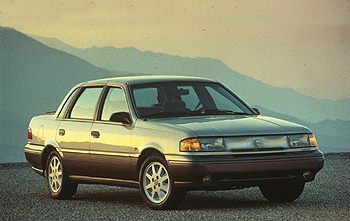
| Built in Oakville, Ontario, Mercury Topaz is the ninth best-selling car. This is the last year for the LTS model seen here. |
December 31: Sales of automobiles are off by 1.2 million
units this year. Analysts blame the five percent decline on the new federal Goods
and Services Tax introduced last year. In order, the top ten best-selling vehicles in Canada this year
are the Chevrolet Cavalier, the Honda Civic, the Honda Accord, the Ford Tempo,
the Pontiac Sunbird, the Ford Taurus, the Toyota Camry, the Toyota Corolla, the
Mercury Topaz and the Toyota Tercel.


.jpg)


hhMmQCGk~$(KGrHqEOKjsEwOiU1!IQBMN2mNM-q!~~_35.JPG)